Guide
Best Workflow Automation Software: 2026 Guide
Discover the best workflow automation software for social commerce. Compare 8 AI employee platforms to automate replies, moderate ads, and recover revenue.
16 min read
read
·


Workflow automation is no longer just app connectors and approval chains. In 2026, the category is big enough to show clear platform leaders, with more than 38,824 companies already using workflow automation tools, and Apache Airflow holding an estimated 23.08% market share in the 6sense dataset (6sense workflow automation market overview). That scale matters because the strongest software choices now reflect different operating models, from programmable orchestration to enterprise governance. For DTC and ecommerce brands spending heavily on Meta and TikTok ads, the practical shift is even sharper. The best workflow automation software is the one that can act like an AI employee, answering comments, handling DMs, moderating harmful content, and recovering revenue while your team focuses on creative and media buying.
This guide skips the generic feature parade. If your comment section and inbox drive sales, you need automation that protects ad spend and converts buyer intent in real time. If your team works in regulated categories, you also need audit trails, escalation paths, and controls that hold up under pressure. The right platform should help you move faster, not create another system to babysit.
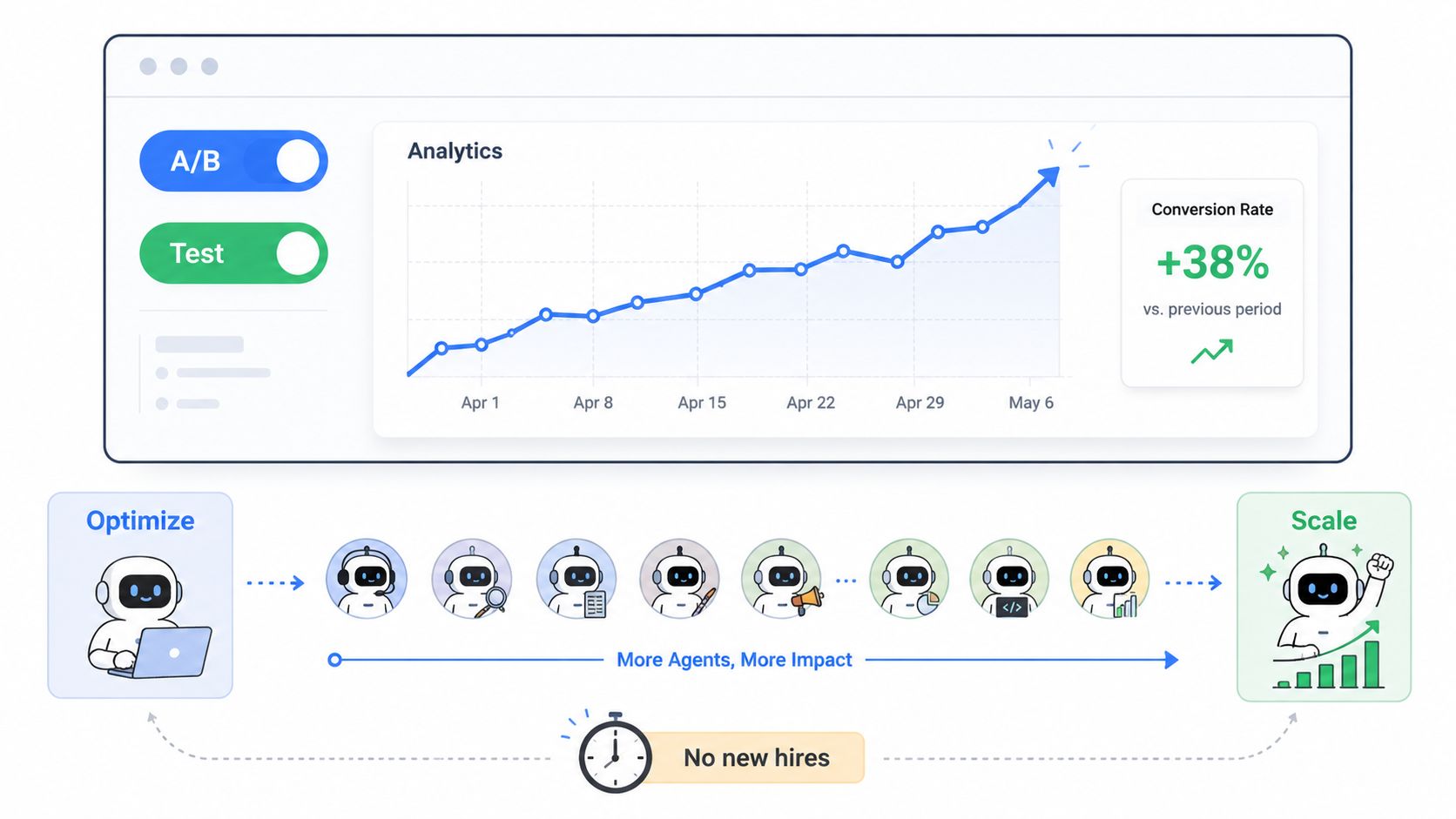
Table of Contents
6. Integration and No-Code Setup for Agencies and Multi-Channel Operations
7. Compliance, Privacy, Safety and Regulated Industry Controls
8. Workflow Optimization, Continuous Improvement and Scaling Without Headcount
1. Exerta AI Employees for Social Commerce
Exerta is built for brands that treat comments and DMs like revenue channels, not side chatter. It deploys AI employees across Facebook, Instagram, TikTok, and website chat to reply in brand voice, moderate harmful content, detect buyer intent, and push people toward purchase. Every action is logged and attributed, which matters when you need to prove that a comment reply or DM follow-up recovered money. SMS, email, and voice are next on the roadmap.
A practical setup starts with your best replies, not with a blank prompt. Feed Exerta the messages your team already uses when a customer asks about price, sizing, shipping, or ingredients, then define moderation rules before you go live. That approach gives the system a clear voice and keeps it from replying too loosely on your public ads.
Practical rule: Start on Facebook comments, where the risk is lower and the volume is easy to monitor, then expand into Instagram DMs and TikTok once the tone and escalation paths are stable.
The brand fit is obvious for DTC and ecommerce teams that run paid social. Exerta is designed to recover sales that manual teams miss, and it keeps working when comments spike after a new creative launch or a flash sale. If your ad spend is leaking into negative comments, scam replies, or unanswered buyer questions, the platform can protect the campaign while still moving people toward checkout. For a clearer picture of how the system works in practice, the internal overview of what an AI employee actually does all day is worth a close read.
Specific operational examples make the use case concrete. A DTC apparel brand reduced response time from 6 hours to 12 seconds, which helped capture 23 sales that would have scrolled past unanswered. A telehealth clinic used Exerta to answer compliance-sensitive comments while maintaining HIPAA standards and recovered 18% more appointment bookings. An agency managing 12 client accounts used it to unify comment responses across pages and cut moderation overhead by 60%. A supplement brand recovered $47K in abandoned checkouts by detecting “price question” intent in comments and sending cart recovery links within 90 seconds.
3. Content Moderation and Brand Safety Automation

Public comments can help a campaign move, or they can drag it down fast. Competitor spam, fake claims, toxicity, and scam replies under a paid post turn the ad into a trust problem. Moderation automation protects the campaign by hiding harmful content quickly, applying rules the same way every time, and keeping an audit trail for review.
Speed matters, but control matters more. Brands need clear rules for what gets hidden, what gets escalated, and what stays visible for a reply. That matters on Meta and TikTok, where a small number of bad comments can make a strong creative look unsafe. The practical guide on brand reputation protection for social ads treats moderation as an operating system, not a cosmetic filter.
A supplement brand hid 97% of competitor spam and moved ROAS from -8% to +12%. A financial services agency hid coordinated false claims under client ads and improved conversion by 16%. A telehealth platform removed HIPAA-violating comments within seconds to protect compliance.
Build moderation in layers
Start with high-confidence rules first, such as spam keywords, repeated links, and obvious all-caps negativity. Then add sentiment-based rules once you have seen how often the automation hides legitimate customer questions. Whitelisting verified and internal accounts also reduces accidental hiding, which matters when your team is managing public ad comments at scale.
If a rule is too broad, it will hide real buyers. If it is too narrow, harmful replies stay public long enough to affect the campaign. The right setup is a layered one, with hard filters for clear abuse and softer review paths for edge cases.
For social commerce brands, moderation is part of revenue protection. A comment thread filled with fake claims lowers trust, slows conversions, and wastes paid traffic. A clean comment section keeps the ad focused on product interest, purchase questions, and direct next steps.
3. Content Moderation and Brand Safety Automation
Public comments can help a campaign, or they can poison it. When competitor spam, fake claims, toxicity, or scam replies pile up under a paid post, the ad starts working against itself. Moderation automation protects the campaign by hiding harmful content fast, applying rules consistently, and preserving an audit trail for review.
The useful part is not just speed. It's control. Brands need clear rules for what gets hidden, what gets escalated, and what gets left visible for response. That matters on Meta and TikTok, where a few bad comments can turn a strong creative into a trust problem. The enterprise guidance on brand reputation protection is useful because it treats moderation as an operational system, not a cosmetic filter.
A supplement brand hid 97% of competitor spam and moved ROAS from -8% to +12%. A financial services agency hid coordinated false claims under client ads and improved conversion by 16%. A telehealth platform removed HIPAA-violating comments within seconds to protect compliance.
Build moderation in layers
Start with high-confidence rules first, such as spam keywords, repeated links, and obvious all-caps negativity. Then expand into sentiment-based rules once you've seen how often the automation hides legitimate customer questions. Whitelisting verified and internal accounts also reduces accidental hiding, which is critical when a creator, founder, or customer success lead comments on a post.
Use hide rather than delete. Hide keeps the action auditable and avoids unnecessary friction when a user checks back later. Review hidden comments weekly. If a rule catches too much, tune it. If it misses obvious junk, tighten it. During crises, tighten moderation. When sentiment settles, ease back so you don't over-filter normal conversation.
The same standard applies to agencies. If you're managing several brands, the moderation layer should protect each account's voice separately. A false positive on a niche product launch can be just as damaging as leaving spam visible. Good moderation automation keeps the feed readable, the ad spend protected, and the review process defensible.
4. AI Agents vs. Traditional Chatbots and Hiring
Traditional chatbots are good at one thing, simple paths. They break when the customer asks two questions at once, changes the subject, or pushes back on price. AI agents are better because they can handle context, multi-turn replies, and edge cases without forcing the conversation into a rigid script.
That difference shows up in daily operations. A DTC brand with 3 reps handling 2K daily interactions deployed AI agents and supported 4x volume with the same headcount. A subscription box company reached 67% resolution with AI agents versus 40% with a traditional chatbot. An agency found AI agents at $500/month per client far cheaper than hiring dozens of community managers.
What changes in practice
AI agents reduce the gap between customer intent and response. They can identify whether a comment is a buying signal, an objection, or a compliance issue, then choose a reply path that fits. That's different from a rules-only chatbot, which usually needs the exact phrase it was trained to expect.
Operational benefit comes from elastic capacity. If a launch brings a flood of DMs at night, the system doesn't wait for morning coverage. If a creator collab brings a spike in comments, it can absorb the volume without hiring an overnight moderator team. Humans still matter for escalations, VIP customers, and complaints, but the first pass becomes machine-assisted instead of manual.
Keep humans for exceptions, not routine volume. The minute your team starts answering the same question 50 times a day, the work should move into automation.
For advertisers, the best practice is simple. Start AI agents on lower-stakes comment threads, train them on weekly feedback, and monitor tone closely. If the replies drift, fix the source material before the problem spreads. If the agent performs well on comments, move it into DMs where the conversion stakes are higher.
The point is not to replace your team. It's to stop paying people to do work software can handle first.
5. Revenue Attribution and Analytics for Social Commerce
If you can't tie the reply to the purchase, you can't defend the budget. Social commerce automation needs attribution that shows which comments, DMs, and chat replies recovered revenue. That means linking interactions to purchases with tracking pixels, UTM parameters, and ecommerce integrations.
The operational value is straightforward. Marketing teams need to know whether the revenue came from a comment reply, a DM follow-up, or a web chat handoff. Leadership needs a clean number they can trust. Agencies need proof that the service did more than reduce inbox clutter. The data from the interaction has to flow all the way into reporting.
A supplement brand tracked $47K recovered in 60 days and justified a budget increase with an 8:1 ROI. An agency showed $32K recovered in month 1 from unanswered DMs and secured a client contract. A fashion brand found TikTok DM replies converted 3x better than Instagram and reallocated agent capacity accordingly.
What to measure first
Install tracking pixels early and connect Shopify before you scale the workflow. Then separate 7-day and 30-day windows so you can see quick wins and delayed conversions without blending them together. Track order value, not just order count, because some conversation-driven purchases are low-ticket and others have real AOV impact.
Report recovered revenue weekly to leadership. That cadence keeps the automation from becoming invisible and makes it easier to decide where to expand. If a comment workflow is producing more revenue than a DM workflow, shift capacity there. If one CTA style converts better, standardize it. If a campaign starts creating a lot of intent but little checkout activity, adjust the follow-up sequence before the lead drops.
The sharpest teams treat attribution as the operating system for the AI employee, not as an afterthought. Without it, automation looks busy. With it, you know exactly where the money came from.
6. Integration and No-Code Setup for Agencies and Multi-Channel Operations
Agencies don't have time for long onboarding cycles. They need a setup that works across multiple accounts, doesn't require engineering support, and can be rolled out without breaking each client's workflow. That's where no-code setup matters most.
The useful model is simple. Connect the client's Meta Business Manager, pull in the brand rules, set escalation paths, and launch with templates. Once the first account is working, clone the structure and tune it for the next one. That reduces the time spent rebuilding the same logic from scratch.
An agency deployed automation to 12 clients in 48 hours instead of 12 to 16 weeks. A social agency created a new $5K/month service using templates and one-click Shopify setup. A telehealth firm set HIPAA-compliant moderation rules across 8 clients in a day using bulk configuration.
What agencies should standardize
Use templates as a starting point, not the final version. Every brand has different language, escalation tolerance, and moderation thresholds. Set role-based access immediately so client data stays separate. Build SOPs that let clients review and approve the kinds of responses the agent can send before anything goes live.
The workflow builder becomes the center of this setup. When the logic is visible and editable, agencies can move faster without losing control. That matters when a client wants a small edit on Friday afternoon and the campaign launches Monday morning.
Batch onboarding also helps the team stay sane. If three new accounts launch on the same day, standardize the build sequence, then customize only the parts that affect voice, moderation, and escalation. That keeps the agency from spending billable time reinventing the same workflow.
For multi-channel operations, the advantage is consistency. Facebook, Instagram, TikTok, and website chat should not feel like four separate systems. They should feel like one workflow with different entry points.
7. Compliance, Privacy, Safety and Regulated Industry Controls
Regulated industries cannot treat automation like a loose template. Telehealth, finance, insurance, and Medicare lead gen need systems that can hide risky content, redact personal information, and preserve audit trails. If the workflow cannot survive review, it is not ready for live traffic.
Start with legal and compliance rules, then build prompts around them. Define what counts as personal health information, unverified claims, financial advice, or sensitive customer data before the agent touches public comments or DMs. Give the system a narrow first pass and a clear escalation path for anything unclear, so the team does not waste time rechecking the same edge cases.
A telehealth clinic hid 98% of HIPAA-violating comments within 24 hours using compliance-aware automation. An insurance agency flagged and hid unverified claims while leaving legitimate coverage questions visible for agent review. A Medicare lead-gen company automated DM replies to avoid exposing personal health information.
Build the guardrails before volume arrives
Escalate edge cases to compliance the first time, then turn the approved answer into a rule so the team does not repeat the same decision manually. Log every hide and redact action for audit purposes. Test the rules on internal fake data before live deployment. The first failure is always cheaper in a sandbox.
Rules also need upkeep. Regulations change, campaigns change, and customer language changes with them. If your team launches a new offer or starts a new lead flow, the compliance logic has to move with it.
In regulated workflows, speed only matters when the output is safe enough to keep.
Generic automation tools usually stop at routing tasks. They do not always give you the controls needed for sensitive public conversations. If your brand is in a high-stakes category, the software has to protect the business while still converting interest. For a broader playbook on keeping engagement high without adding staff, see our guide on scaling engagement without headcount. That is the standard.
8. Workflow Optimization, Continuous Improvement and Scaling Without Headcount
Automation shouldn't stay static after launch. The gain comes from tuning the workflow after you've seen what the audience asks, where the false positives show up, and which replies convert best. If the first month is about deployment, the next months are about refinement.
The workflow should live in the dashboard daily at first, then weekly once patterns are stable. Watch recovered revenue, response time, escalation rate, and false positives. If one message template underperforms, replace it. If a moderation rule hides too many legitimate questions, relax it. If the agent handles one intent better than another, shift the priority.
A supplement brand's A/B test changed checkout link format and added $8K/month by improving conversion 23%. An agency adjusted moderation rules after finding 15% false positives and restored legitimate question visibility, lifting conversations 18%. A DTC brand scaled from $500K to $5M ad spend using automation instead of hiring, supporting 10x volume with minimal cost.
How to scale without adding layers of labor
Keep 1 to 2 humans for escalations and quality checks even as automation expands. That keeps the system honest and protects brand voice under stress. Run two-week A/B tests on high-volume intents so you can compare reply styles without waiting a quarter for answers.
Pick 2 to 3 primary metrics and ignore the rest until the workflow is stable. Revenue tells you whether the system is making money. Response time tells you whether it is fast enough. Escalation rate tells you where humans still need to step in. Comparing automation cost to headcount over 12 months helps you make staffing decisions based on reality, not gut feel.
8-Tool Comparison: Social Commerce Workflow Automation
Solution | Core capabilities | Target audience & use cases | Performance & reliability | Value proposition & pricing |
|---|---|---|---|---|
Exerta: AI Employees for Social Commerce | Instant replies to comments/DMs/web chat, moderation, sales-recovery flows, Shopify attribution, one-click integrations, no-code workflows | DTC/ecommerce, telehealth, lead-gen, agencies managing Meta/TikTok ads | Responses in seconds, 24/7 coverage, 99.9% SLA, full audit trails | Documented ~15% sales lift, $2M+ recovered; Free→Starter→custom plans; minutes-to-setup |
Ad Comment, DM & Chat Automation for Revenue Recovery | Real-time monitoring, intent detection, conditional replies, checkout link insertion, web chat | Brands and agencies handling high ad-comment volumes and checkout recovery | Captures warm leads fast, scales with traffic, subject to platform rate limits | Improves same-day conversions and frees teams; pricing varies by volume/features |
Content Moderation & Brand Safety Automation | Keyword/sentiment filters, spam detection, custom rules, safe-hiding, reporting | Brands running paid social and ads, compliance-sensitive accounts | Prevents CTR/ROAS drops, preserves auditability, risks false positives | Protects ad spend and reputation; often offered as a modular feature |
AI Agents vs Traditional Chatbots & Hiring | NLU, multi-turn context, continuous learning, human escalation, brand tone controls | Teams replacing rule-based bots or scaling without proportional hires | Higher resolution & empathy, 24/7, faster than humans; needs training & oversight | Lower cost vs headcount at scale; subscription vs hiring cost tradeoff |
Revenue Attribution & Analytics for Social Commerce | Shopify/Woo integration, pixel & UTM tracking, convo→order attribution, ROI dashboards | Ecommerce teams, finance, agencies proving automation ROI | Shows recovered revenue and cohorts; accuracy limited by tracking windows & privacy | Proves dollar ROI to justify spend; may require pixel/CI setup; premium tier often |
Integration & No-Code Setup for Agencies & Multi-channel Ops | Meta BM native integration, one-click OAuth, template library, multi-account dashboard | Agencies onboarding many clients, multi-account operators | Deploy in hours, reduces dev dependency, some complex workflows need workarounds | Speeds onboarding, enables white-label services; agency pricing / bulk plans |
Compliance, Privacy & Regulated Industry Controls | PII redaction, HIPAA/GLBA checks, audit logs, compliance rule templates, escalation | Telehealth, finance, insurance, regulated lead-gen | Hides violations quickly, preserves logs for audits, needs legal tuning | Reduces legal risk and exposures; enterprise/compliance plans likely required |
Workflow Optimization, Continuous Improvement & Scaling | Real-time dashboards, A/B testing, false-positive tracking, trend alerts, elastic agent capacity | Growth teams, ops, agencies optimizing conversion and cost | Data-driven gains compound over time; requires regular review to avoid drift | Increases recovered revenue without hiring; cost-per-interaction controls for scale |
Choosing Your First AI Employee
The best workflow automation software for your brand depends on one question, where are your customers talking? Start with the channel that has the highest volume of unanswered questions and unmoderated comments. Deploy your first AI employee there, measure the recovered revenue and time saved, and then expand.
For most DTC and ecommerce teams, the smartest first move is the public comment thread. That's where ad spend is most exposed, buyer intent is easiest to spot, and brand safety problems show up in plain view. If your team is already buried in DMs, then start there instead. If your regulated workflow lives in chat, begin with the safest low-risk path and build upward from there.
The playbook is consistent. Train the system on your best replies. Set moderation rules before launch. Tie every action to attribution. Keep humans in the loop for escalations and VIPs. Then review the dashboard daily until the pattern is stable. The goal is not to automate everything at once. The goal is to prove one workflow, one channel, and one revenue path before you scale the next.
A strong automation stack changes how your team works. Media buyers get cleaner comment sections and better signal. Community managers spend less time on repetitive replies. Founders see recovered revenue instead of vanity engagement. Agencies can package the service and defend the value with actual numbers. That's the standard now, not a nice-to-have.
If you want to turn comments and DMs into a real revenue channel, visit Exerta and see how AI employees can answer buyers, hide harmful comments, and recover sales across Facebook, Instagram, TikTok, and website chat. Exerta is built for brands and agencies that need automation with attribution, not another tool that creates more work. Start there if you want your next workflow to pay for itself.

