Real Time Customer Engagement: A Practical Guide
16 min read
read
·

You paid for the click, the impression, and the attention. Then a shopper asks a simple question under the ad, “Does this run true to size?” Another asks about shipping. A third wants to know how your ingredients compare with a competitor. The comments keep arriving, but nobody replies until the next morning. By then, the buyer has closed the tab, the campaign has lost momentum, and the media budget has funded a conversation your brand never joined.
That's the operating problem behind real time customer engagement. It isn't only about answering faster. It's about recovering intent between the public comment, the private message, and the checkout page, while keeping the reply on-brand and compliant.
Table of Contents
The Moment a Winning Ad Starts Losing Money
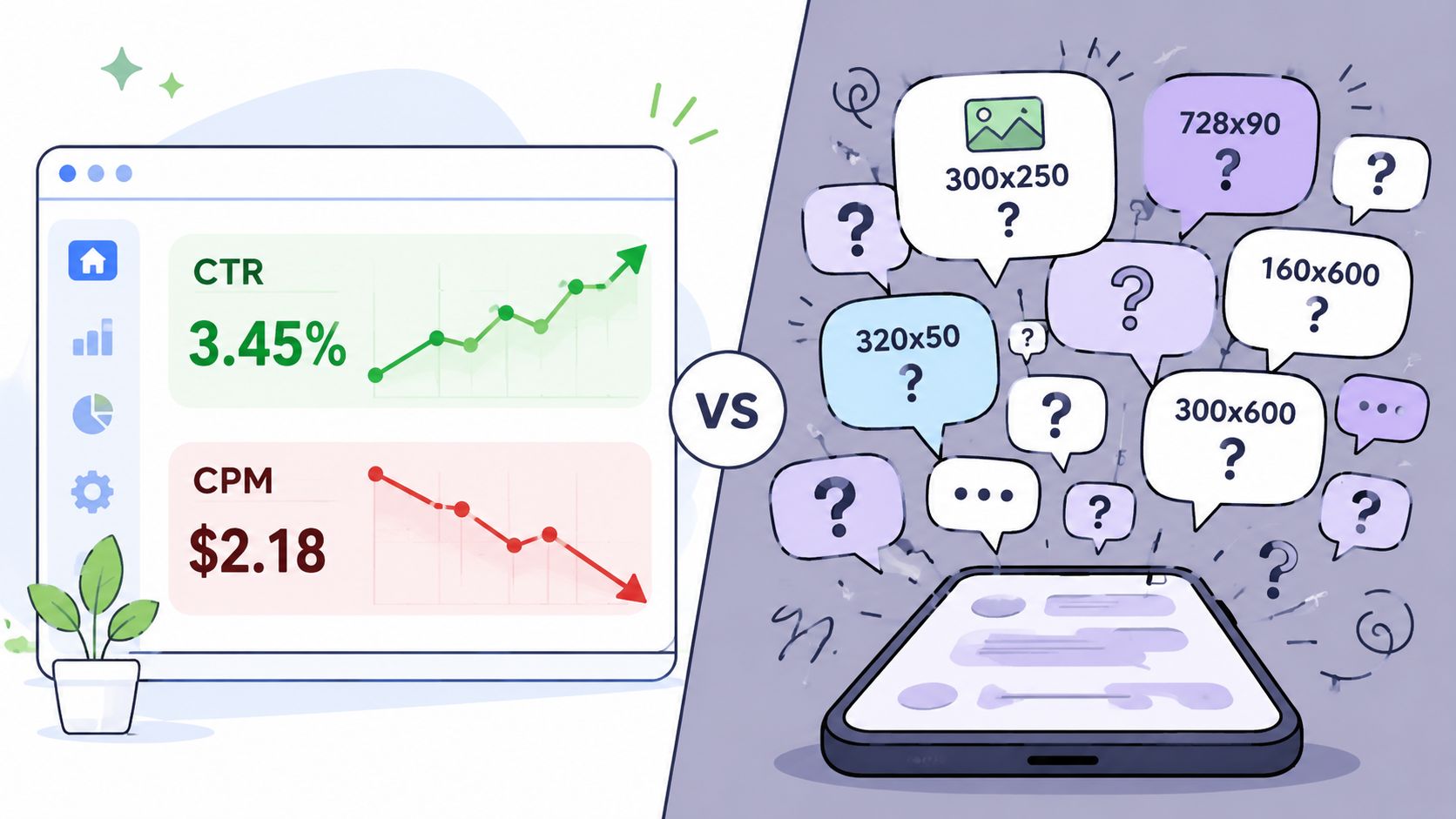
A Meta ad can look healthy in the media dashboard while leaking revenue in the comment section. The CPM falls, the CTR improves, and shoppers start asking purchase questions. But if those questions sit unanswered, the ad's most valuable signals remain unworked.
The pattern is familiar. A shopper comments publicly because they're interested but uncertain. They want a size recommendation, delivery detail, ingredient explanation, subscription term, or direct comparison. The answer should move them into a DM, where the brand can share a relevant product or cart link. Instead, the comment becomes a dead end.
That gap matters because the paid ad created the demand already. The brand doesn't need to manufacture another impression. It needs to act on the attention it bought.
The leak sits between intent and action
Customers increasingly use social channels as support and buying surfaces. Independent industry summaries report that 76% of customers expect a response within 24 hours on social platforms, while 53% expect a reply on X within one hour and 72% expect one within an hour for complaints. The same summaries put average social response times at roughly 4 to 5 hours in one benchmark and 12 hours in another. These social customer service response benchmarks show why a next-day workflow misses the commercial moment.
Public comments also affect what later shoppers see. Unanswered objections, spam, and harmful remarks can make an ad look unmanaged, even when the creative and offer are strong. A moderation and response workflow protects the conversation around the ad, not just the inbox.
For website traffic, an exit-intent experience can help capture shoppers who are about to leave. A practical reference on Receiver exit intent popup strategies is useful when the leak happens after the click rather than under the ad.
The first audit should be simple: identify unanswered high-intent comments, trace whether those shoppers entered a DM, and check whether a checkout link ever reached them. Exerta's analysis of why unanswered ad comments are costing you sales follows the same principle. Every unanswered purchase question is paid attention without a paid follow-through.
What Real Time Customer Engagement Actually Means
A buyer who comments at 9 p.m. on a Tuesday doesn't think in staffing windows. They're deciding whether to keep shopping or close the tab. Real time customer engagement means the brand can recognize that intent, answer the question, and guide the next action while the shopper is still active.
The system has three connected jobs.
First, it detects meaning in the interaction. “Do you have this in petite?” is a sizing question. “How long does delivery take to California?” is a shipping question. “Is this safe for sensitive skin?” may require a controlled answer or human review, depending on the product category.
Second, it chooses the right surface. A public comment may need a short answer and an invitation to continue privately. A DM may need a product recommendation and tracked cart link. A website visitor may need an objection-handling prompt tied to the page they're viewing.
Third, it records the outcome. The workflow should connect the interaction to a link click, checkout event, purchase, support escalation, or no action. Without that connection, the team can measure replies but not revenue recovery.
The 24-hour operating window
Meta's standard messaging window gives businesses 24 hours to send free-form replies after a customer messages them, and each new customer message resets that clock. Outside the window, only approved message types can be sent. The Meta 24-hour messaging window makes timing more than a service preference. It affects whether a comment-to-DM workflow can deliver the product detail, offer, or checkout handoff the shopper needs.
That means teams should treat the first response as the start of a conversion workflow, not the end of a moderation task. A useful reply answers the immediate question, confirms the next step, and moves the buyer toward a relevant action without forcing them to repeat context.
Real time engagement covers paid social comments, Instagram and Facebook DMs, TikTok interactions, website chat, and the data connections behind them. It also includes moderation, escalation, order context, and attribution. A narrow live-chat widget can answer a question. A revenue recovery system follows the question until the buyer purchases, opts out, or needs a human.
For a broader view of how these surfaces connect, the omnichannel customer engagement framework is a useful reference. The core idea is direct: real time engagement converts demand your campaigns have already generated.
Why Speed and Visibility Drive Conversion and Ad Efficiency
Speed affects conversion because buyer intent decays. InsideSales analyzed 55 million sales activities across 5.7 million inbound leads at more than 400 companies and found that only 0.1% of leads were engaged within five minutes. Conversion rates fell 8x after the five-minute mark compared with first contact within five minutes. The InsideSales response-time research is about inbound leads, but the operational lesson applies strongly to social commerce, where the shopper has already clicked, commented, or opened a conversation.
The number isn't a promise for every DTC funnel. It's a reason to measure your own comment-to-DM delay instead of treating response time as a soft customer service metric.
Response Time | Relative Conversion Rate | Impact on Ad Delivery |
|---|---|---|
Under 5 minutes | Strongest opportunity for active intent | Keeps purchase questions moving while the ad is still in view |
5 minutes to 1 hour | Lower likelihood than immediate contact | Creates more room for objections and competitor comparison |
1 to 24 hours | Intent may still exist, but the active session is weaker | Leaves public questions and negative context visible longer |
After 24 hours | Free-form Meta replies may no longer be available | Breaks some comment-to-DM and DM-to-sale workflows |
Moderation changes the conversion environment
Comment moderation isn't separate from performance marketing. It changes the context in which later shoppers evaluate the offer.
A Harvard Business School field-and-lab research program tested automated comment moderation on real brand ad campaigns. Across roughly 3.4 million link clicks, registration completion per click rose from 1.67% to 1.94%, a 16% relative lift, while ROAS increased from 0.459 to 0.678, a 48% relative improvement. The HBS moderation research concluded that removing harmful comments can change how users perceive brand trust and influence conversion behavior.
That doesn't mean hiding every criticism. It means separating genuine objections from spam, scams, abuse, and misleading claims, then routing legitimate concerns into a useful response. A brand that removes all disagreement can look evasive. A brand that leaves every harmful comment visible can make the ad harder to trust.
Calculate recovery, not just reply volume
Start with a simple path:
Count high-intent comments.
Measure how many receive a DM response.
Track link clicks from those conversations.
Connect checkout and purchase events to the thread.
Report recovered revenue separately from net-new campaign revenue.
If you want a deeper buying-intent lens, Exerta's engagement analysis can help frame the difference between casual interaction and commercial intent. The key dashboard question is not “How many comments did we answer?” It's “How much paid attention did we turn back into a measurable purchase path?”
Channels and Tech Stack for Live Engagement
Every channel creates a different operational problem. The mistake is applying one inbox process to all of them.
Facebook and Instagram comments
Paid ad comments usually contain a mix of questions, praise, objections, spam, and requests that should stay private. An AI employee can classify the comment, publish a short public response, open or continue a DM where allowed, and send a tracked product or cart link.
The public reply matters because it serves the original commenter and the shoppers reading below the ad. Keep it specific. “Yes, the relaxed fit runs true to size. We've sent the measurement guide by DM” is more useful than “Send us a message.”
Instagram and Messenger DMs are also where the offer handoff happens. The workflow should carry forward the product, campaign, and question context, then use order or catalog data to avoid sending an irrelevant link.
TikTok conversations
TikTok comment velocity and conversation patterns differ from Meta. The response needs to be concise, natural, and careful with claims. TikTok's ad products include controls to filter comments by defined rules, hide unsuitable comments, disable comments, and review activity in a dashboard. TikTok also says its global moderation team reviews flagged content 24/7. TikTok's brand-safety guidance provides the platform context, while your own rules determine what gets hidden, answered, or escalated.
An AI employee can tag intent, detect a regulated or high-risk question, and route it to a human rather than improvising. That's especially important when the creative makes a claim that needs careful qualification.
Website chat and follow-on channels
Website chat catches buyers after the ad click, often when the shopper is comparing products or hesitating at checkout. The AI employee should identify the page, answer the most likely objection, recommend the relevant item, and record whether the visitor adds to cart or leaves.
SMS and email can support later follow-up, but they should be treated as permission-based channels with their own policies. Voice can handle cases where conversation depth matters more than speed. These channels are launching next for Exerta, while Facebook, Instagram, TikTok, and website chat are live today.
The integration backbone should include:
Ad and conversation events: Connect the Meta Graph API and TikTok Shop API to comment, DM, and campaign context.
Commerce events: Send Shopify customer, cart, checkout, and order events into the engagement layer.
Lifecycle follow-up: Connect approved messaging systems for browse abandonment, post-purchase questions, and replenishment.
Identity resolution: Use a CDP layer to tie a comment thread to a profile and then to a purchase, subject to consent and platform rules.
The goal isn't to add more tools. It's to preserve context from comment to conversation to checkout.
AI Employees vs Chatbots vs Human Moderation
The staffing choice changes what your team can handle when ad volume spikes. A decision-tree chatbot is fast, but it expects the shopper to follow a predefined path. Human moderation preserves nuance, but coverage expands with headcount. AI employees sit between those models, handling structured and unstructured interactions while escalating the cases that carry risk.
Dimension | AI Employees | Chatbots | Human Moderation |
|---|---|---|---|
Response time | Can respond in seconds when the workflow is active | Usually immediate | Depends on queue and coverage |
Brand voice | Trained on approved examples, rules, and FAQs | Often rigid or repetitive | Strongest for nuanced conversations |
Comment handling | Can classify intent, moderate, reply, and route | Breaks on unstructured comments | Can interpret context manually |
Attribution | Can connect replies to links and outcomes when integrated | Often stops at conversation completion | Requires disciplined tagging |
Cost model | Scales by channel and volume | Lower complexity, narrower coverage | Headcount scales with workload |
Failure mode | Confidence drift and incorrect edge-case handling | Loops, irrelevant answers, broken handoffs | Delayed replies and inconsistent coverage |
Where each model breaks
Simple bots often fail when a buyer asks a question outside the flow. They may also struggle with link delivery and platform-specific automation requirements, which can interrupt the path to checkout.
Human teams handle objections, refund requests, complaints, and sensitive brand issues better. They also face practical limits. Social response benchmarks commonly measure brand replies in hours, with one benchmark at roughly 4 to 5 hours and another at 12 hours. The response-time benchmark source shows why manual coverage alone creates after-hours gaps.
AI employees still need guardrails. Training data drifts after a creative, offer, or policy changes. A human escalation queue remains necessary for refunds, complaints, UGC rights, sentiment spikes, regulated categories, and low-confidence answers. The strongest design is hybrid. Automation handles repeatable volume, while humans own judgment and voice quality.
If your team is also building content around answer engines, how to rank in AI search offers useful context on structured, trustworthy brand information. The same discipline helps engagement systems answer consistently.
For a practical operating model, see what an AI employee actually does all day. The important distinction is that an AI employee is not just a faster chatbot. It can carry a workflow across a comment, a DM, and a commercial event.
KPIs and Dashboards That Prove Revenue Impact
Response time is necessary, but it isn't a revenue report. A team can answer quickly and still send the wrong product, miss the checkout handoff, or hide a genuine objection without resolving it.
Build the dashboard in four layers.
Engagement health
Track median and 90th-percentile first-response time for comments and DMs. Then add the metrics that expose quality:
Unanswered high-intent rate: Count questions about price, size, shipping, ingredients, availability, and comparisons that remain unresolved.
Sentiment movement: Compare the interaction tone before and after the response.
Moderation outcomes: Separate spam and harmful content from legitimate criticism.
Coverage by ad set: Show which campaigns have active engagement coverage and which do not.
A low median can hide a long tail. The 90th percentile tells you whether late-night and high-volume conversations are still waiting.
Conversion contribution
Measure the path, not the activity:
DM-to-link-click rate
Link-click-to-checkout rate
Checkout-to-purchase rate
Assisted revenue from engagement touchpoints
Revenue tied to comment-to-DM workflows
Use server-side purchase events and Shopify source data where available. Keep “assisted” clearly defined so the team doesn't claim full credit for every purchase that touched a message.
Ad efficiency and recovery
Compare CPM and CTR for ad sets with active engagement coverage against similar ad sets without it. Track the comment-to-reach ratio as an early signal of creative fatigue or objection density.
Recovery deserves its own view. Count buyers re-engaged within the available messaging window, refund-prevention saves, and post-purchase upsells completed inside the thread. The most useful target is not a universal benchmark. It's a rising share of attributed revenue coming from conversations that would otherwise have gone unanswered.
For dashboard structure beyond paid social, an AI search visibility dashboard template can provide ideas for separating visibility, action, and outcome metrics. Your engagement dashboard should apply the same discipline. Replies are activity. Recovered orders are impact.
How Exerta Operationalizes the Playbook
Exerta fits into this system as an AI employee layer for comment, DM, and website-chat triage. It can classify intent, reply in the brand voice, moderate defined categories of harmful content, send relevant links, and route sensitive conversations to human operators.
The rollout should start narrow. Use one ad account and train the brand voice from 50 prior replies, focusing on the objections that appear most often. Review examples for tone, claims, discount handling, shipping language, and escalation rules before turning on broader automation.
A controlled rollout
A practical 90-day sequence looks like this:
Initial setup: Connect the first Meta account, define approved answers, and map comment-to-DM workflows.
TikTok expansion: Add TikTok in week three, after the first workflows have produced enough reviewed examples.
Website coverage: Add web chat in week seven, using page context and product data to handle on-site objections.
Ongoing review: Audit unanswered high-intent threads weekly and revise rules when offers, inventory, or creative changes.
Comment moderation should begin in shadow mode for 14 days. The AI observes and classifies without changing the live ad environment. Operators can review false positives, missed spam, and legitimate complaints before enabling automated actions.
Keep judgment with people
Human operators should own objections that require nuance, refund requests, UGC rights, public backlash, and anything flagged low-confidence. The AI employee should create a clean queue with context, not just forward a vague “customer needs help” notification.
Exerta's workflow builder supports this kind of branching logic and audit trail. Its commercial model is per channel and per volume, not per seat, which aligns cost with the surfaces and conversation load being managed.
Exerta reports use across 250+ brands, a 15% average sales lift, $2M+ in recovered revenue, and 99.9% uptime. Those figures are company-reported product outcomes, not a guarantee for every account. The operator still owns the strategy, approval rules, and measurement model. The platform executes the repeatable parts.
What to Do in the Next Hour
Don't begin by shopping for another dashboard. Find the leak in your current path.
First, export last week's Meta ad comments into a spreadsheet. Mark every thread that remained unanswered after 60 minutes. Separate product questions, objections, support issues, praise, spam, and abuse. The unanswered high-intent count is your starting estimate of paid-social pipeline leakage.
Second, write a short brand-voice response for the most common objection. Keep it to 120 words, including the answer, the qualification, and the next step. For example, a sizing response can answer fit, point to the measurement guide, and ask the shopper to share their usual size only if that information is needed. Turn the approved response into an AI employee prompt with clear escalation conditions.
Third, test the entire path yourself. Click the ad, leave a comment, send the expected DM, request the product link, and complete a checkout test. Record the delay at each handoff. If any step takes more than 30 minutes, automate that workflow first.
For the next 14 days, track only one primary outcome: revenue recovered from previously unanswered ad threads. Keep response time as a diagnostic, but judge the system by the orders it saves.
Exerta provides AI employees for Facebook, Instagram, TikTok, and website chat, handling comment triage, DMs, moderation, and checkout handoffs in a brand-consistent workflow. Visit Exerta to map your unanswered ad conversations and start measuring recovered revenue.