AI Sales Automation: A Practical Guide for DTC Brands
read
·

A TikTok ad can attract a buyer at 9 p.m. and still lose the sale before breakfast. A comment asking about price, sizing, or availability sits unanswered, the buyer opens another brand's site, and the paid click becomes a cost with no recovery path.
That leak is now a systems problem. AI sales automation has moved into mainstream sales operations, with 43% of organizations moderately embedded and 39% deeply embedded across workflows in a 2026 G2 study, while a separate industry summary reported that 78% of organizations used AI in at least one business function and 65% used generative AI regularly. The sales and marketing benchmark summary puts the shift in context.
For DTC brands and agencies, the important question isn't whether AI can draft a reply. It's whether an AI employee can catch intent in a public comment, open the right DM, answer the objection, send a tracked checkout link, and log the outcome before the opportunity disappears. That's the difference between a chatbot experiment and a revenue system.
Table of Contents
The Pipeline That Expires While You Sleep
A buyer comments at 9 p.m., “Does this come in black, and can it arrive before Friday?” The ad has already earned attention, found the right shopper, and surfaced a clear buying signal.
By morning, that buyer may have purchased elsewhere or forgotten the product. A reply sent later can be accurate and polite while still arriving after the sale. Small teams do not need to be careless for this to happen. Running several campaigns leaves gaps after hours, on weekends, during launches, and whenever response volume spikes.
Paid social creates these sales moments in public. Comments answer questions for other shoppers, reveal objections, expose offer confusion, and often show stronger intent than a click. On Meta and TikTok, the comment section is part of the storefront. The DM is part of the checkout journey.
The leak is operational: speed drops when coverage depends entirely on people. Human judgment and empathy still matter, but a human-only queue relies on staffing, notifications, handoffs, and someone checking the correct inbox at the right time. That process fails precisely when demand is hottest.
A simple rule keeps the team focused:
Practical rule: Treat every ad comment as a possible sales event until the buyer's intent is understood.
A useful real-time customer engagement workflow begins with the trigger, not a collection of response templates. It identifies what happened, what the buyer needs next, and which approved action can move the conversation toward purchase without creating compliance or brand risk.
The available sales research points to a broader operational issue. AI-using sales teams in one benchmark reported stronger revenue growth than teams without AI, while sellers spent only 34.2% of their time selling. The AI sales automation benchmark connects that gap to administrative work that can be handled by automation.
The leak is a coverage problem, not a motivation problem. The system must respond while intent is alive, rather than waiting for the team to reopen the inbox.
What AI Sales Automation Actually Means in 2026
AI sales automation is the use of persistent agents, or AI employees, to monitor buyer signals, make context-aware decisions, take approved actions, and record the result. The agent can watch comments, DMs, mentions, form fills, product views, and cart activity across the surfaces where demand appears.
That definition separates the category from a website chat widget. A widget waits for someone to open a conversation in one place. An AI employee follows the workflow across channels, understands the trigger, and acts on the next step.
The anatomy of an AI employee
A practical system has three working parts:
A watcher ingests comments, replies, DMs, mentions, lead forms, and commerce events.
A decision layer interprets intent using brand-trained instructions, product information, eligibility rules, and escalation guardrails.
Action tools send replies, open private conversations, apply tags, create CRM records, share checkout links, and report revenue events.
The action layer matters most. A system that only suggests a response still leaves the queue with a person. A system that acts can answer a product question, ask a qualifying question, route a warm buyer to checkout, and hand off exceptions to a human.
The architecture should also preserve continuity. A buyer who starts in a TikTok comment may move to a DM, then to a product page, then to checkout. The system needs one useful conversation history, not a collection of disconnected replies.
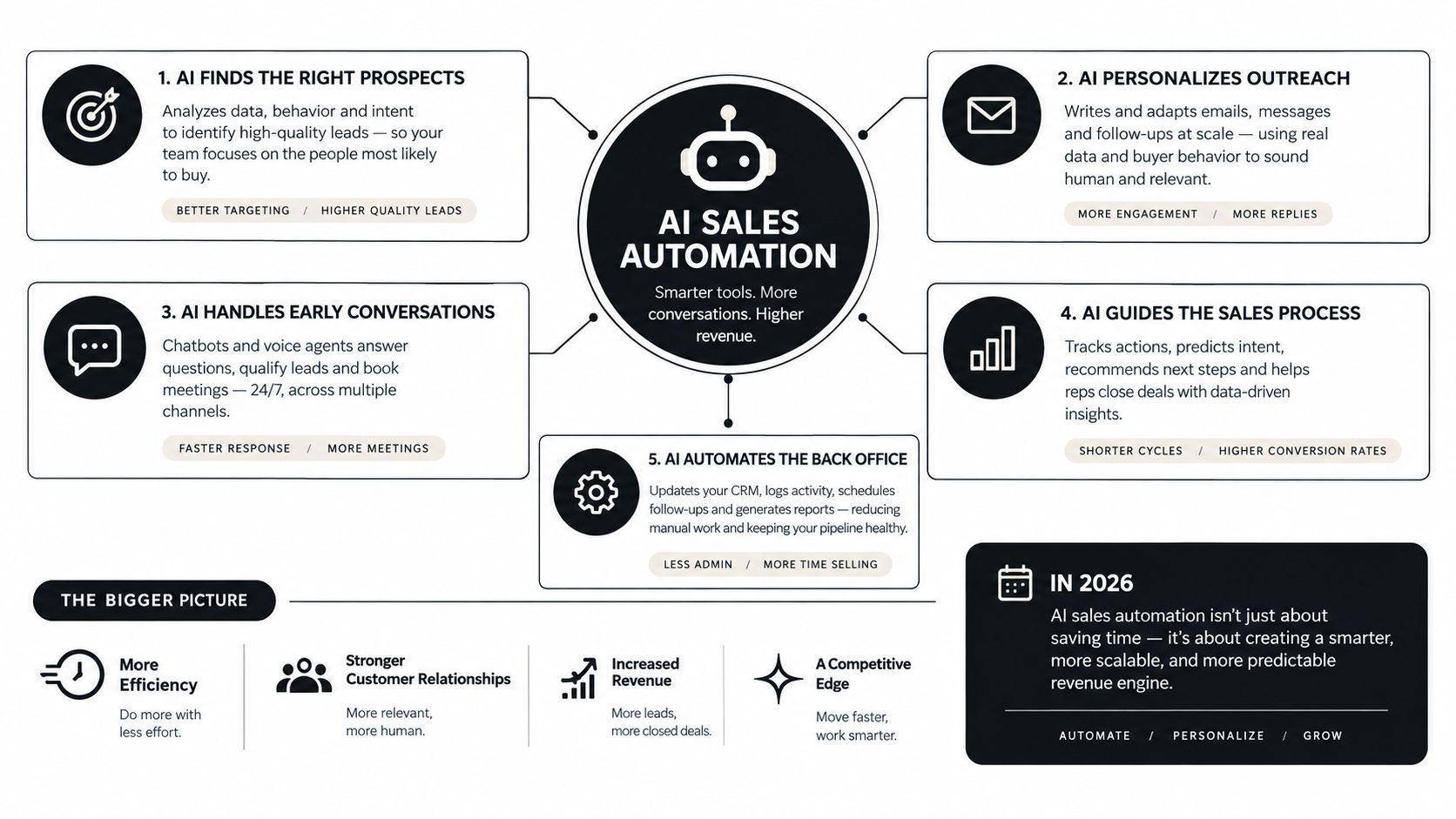
For teams starting from first principles, a guide to what is Intelligence can help clarify the difference between reporting, recommendation, and autonomous action.
What separates a serious system
Three tests expose novelty tools quickly:
Cross-channel continuity: The system carries intent from comment to DM to checkout.
Action ownership: It performs the approved next step instead of returning a draft.
Revenue accountability: Every meaningful touch connects to an outcome that marketing and finance can inspect.
AI sales automation, then, means an AI employee that senses buyer intent, reasons within clear limits, acts across the sales workflow, and leaves an auditable record. That's the working definition to use when evaluating any platform.
The Four Use Cases That Recover Real Revenue
Paid social creates buying signals in public. The revenue leak starts when a comment, DM, form, or checkout session waits too long for a useful response. Start with the points where intent already exists, then automate the next action within clear rules.
1. Comment and DM recovery
Trigger: A buyer asks about price, stock, delivery, ingredients, sizing, or an offer beneath a Meta or TikTok ad.
Channel mix: Public comment, private DM, product page, checkout.
The AI employee answers the public question in the brand voice, moves the conversation private when appropriate, asks one useful qualifier, and sends the correct product or checkout link. Set up the first workflow today by tagging high-intent phrases such as “price,” “link,” “available,” and “how much.” Route those comments into an immediate DM sequence, with a human path for uncertainty, complaints, or sensitive questions.
Response latency is the operating constraint. A deployment benchmark reported average response time falling from 4 hours to 30 seconds, qualified leads rising from 50 to 140 per month, and lead-to-demo conversion moving from 12% to 34%. The deployment benchmark illustrates the commercial sequence: faster handling can create more qualified conversations and booked outcomes.
2. Lead follow-up
Trigger: A visitor submits a lead form or requests a quote.
Channel mix: Lead form, DM, CRM, calendar, email when available.
The agent uses information already supplied in the form, asks the next qualifying question, routes the lead by fit, and books a meeting when the buyer is ready. Connect the workflow to lead ads and define human escalation for high-value, regulated, or sensitive cases. The useful handoff is specific: include the buyer's answers, requested product, and unresolved question rather than sending a bare notification.
3. Cart and browse recovery
Trigger: A shopper views a product or leaves checkout without completing an order.
Channel mix: Website chat, DM, email when available, checkout.
Build the recovery path around the specific SKU, inventory state, offer rules, and consent status. A shopper who viewed one product and raised a known objection should receive a relevant answer, not a generic reminder. Check the link, stock message, discount rule, and escalation condition before activating the flow.
4. Post-purchase expansion
Trigger: An order is delivered or a customer reaches a defined ownership milestone.
Channel mix: Website chat, DM, email when available.
The agent can recommend a relevant complement, request a review, answer usage questions, and escalate dissatisfaction before it becomes a public complaint. Match the offer to the product relationship and customer context. A fixed campaign calendar is a weak substitute for knowing what the customer bought and what they may need next.
AdStellar AI playbook insights can help connect paid-social engagement to a sales workflow.
Use Case | Trigger Event | Primary Channels | Expected Lift | First Action |
|---|---|---|---|---|
Comment and DM recovery | Product or offer question | Meta, TikTok, DM, checkout | Faster response and more qualified conversations | Tag high-intent comments for instant DM |
Lead follow-up | Form submission | Lead form, DM, CRM, calendar | More completed qualification and booked conversations | Connect lead ads to a qualification sequence |
Cart and browse recovery | Product view or abandoned checkout | Website, DM, email when available | More recovered shopping intent | Build a SKU-specific recovery flow |
Post-purchase expansion | Delivery or ownership event | DM, website, email when available | More repeat purchase and review activity | Create one complementary offer and review path |
All four address one operating failure: paid media creates intent, while comments, DMs, and follow-up queues leave it uncaptured.
AI Employees Versus Chatbots and Human Moderators
The useful comparison isn't whether a chatbot, moderator, or AI employee can answer a message. All three can answer something. The better question is who owns the time between public intent and completed checkout.
A rule-based chatbot handles predefined paths inside a limited surface. It works well for predictable questions and simple routing, but it often loses context when a buyer moves from a comment to a DM or from social to the website.
A human moderator brings judgment to tone, safety, and unusual situations. The trade-off is coverage. Response time depends on staffing, and the moderator may not have product, CRM, attribution, or inventory context in the same workspace.
An AI employee watches the commercial surface continuously, interprets intent, acts within guardrails, and escalates when the interaction needs a person. The right choice depends on volume, risk, and the cost of a missed conversation.
Capability | Rule-Based Chatbot | Human Moderator | AI Employee |
|---|---|---|---|
Comment monitoring | Limited or separate | Manual queue | Continuous workflow monitoring |
Context across channels | Usually weak | Depends on tools and training | Designed for continuity |
Response speed | Fast inside defined flows | Staffing dependent | Fast for approved intents |
Checkout action | Often link-based | Manual handoff | Can route and track approved paths |
Brand judgment | Fixed rules | Strong human judgment | Guardrails plus escalation |
Revenue attribution | Often limited | Usually manual | Built around logged outcomes |
Best fit | Narrow, predictable FAQs | Sensitive or complex cases | High-volume intent and follow-up |
A Shopify operator comparing top chat bot Shopify apps should check whether the product only answers onsite questions or also owns the social comment-to-cart path.
For DTC teams, the break point appears when the public comment section becomes a sales surface rather than a support queue. If every interaction needs a human decision, hire for that work. If many interactions follow repeatable patterns but arrive across several channels, an AI employee can absorb the repeatable work while people handle exceptions.
The distinction between a chatbot and AI matters because the buyer doesn't care which interface received the first message. They care whether the brand answered, understood the question, and made the next step easy.
A Same-Day Playbook for Comments and DM Recovery
A paid social conversation can expire inside the 24-hour window after the user's last interaction. During that period, Meta business messaging supports free-form replies in Messenger and Instagram. Each new user message resets the clock. After the window closes, ordinary promotional messages require the user to re-engage. Use this explanation of the 24-hour messaging window to confirm the operating details before building automations.
Treat the window as a live revenue queue. TikTok and other channels have their own policies, so check them separately. The shared operating rule is simple: answer while the interaction is active, preserve consent and context, and escalate before a warm buyer goes cold.
Route the whole queue
Bring Facebook comments, Instagram DMs, and TikTok replies into one working view. Meta and TikTok comment sections are storefronts, not afterthoughts. A buyer should receive a consistent answer regardless of which page or shift catches the message.
Same-day action: Export current comment and DM categories. Assign one owner for pricing, stock, shipping, product fit, and complaint escalation. Define the handoff path before turning on automation.
Trigger a brand-voice reply
The first response should address the exact question. A shade question needs a shade answer. If stock is unavailable, explain that clearly and offer the approved next step instead of sending a generic purchase prompt.
Same-day action: Write approved replies for recurring questions, then allow the AI employee to respond within ten minutes for low-risk intents. Keep claims, discounts, and product recommendations inside approved rules.
Qualify in the second message
Use the first reply to reduce friction. Use the second to identify the purchase blocker, such as size, use case, delivery timing, or budget. Ask one easy question. A single useful qualifier produces better signal than a form disguised as conversation.
Send a tracked next step
Give a warm buyer the relevant product or checkout link, not the homepage. Add UTM tracking and a clear event name. Log the comment ID, DM thread, product, and resulting order so the team can reconcile revenue with the original ad interaction.
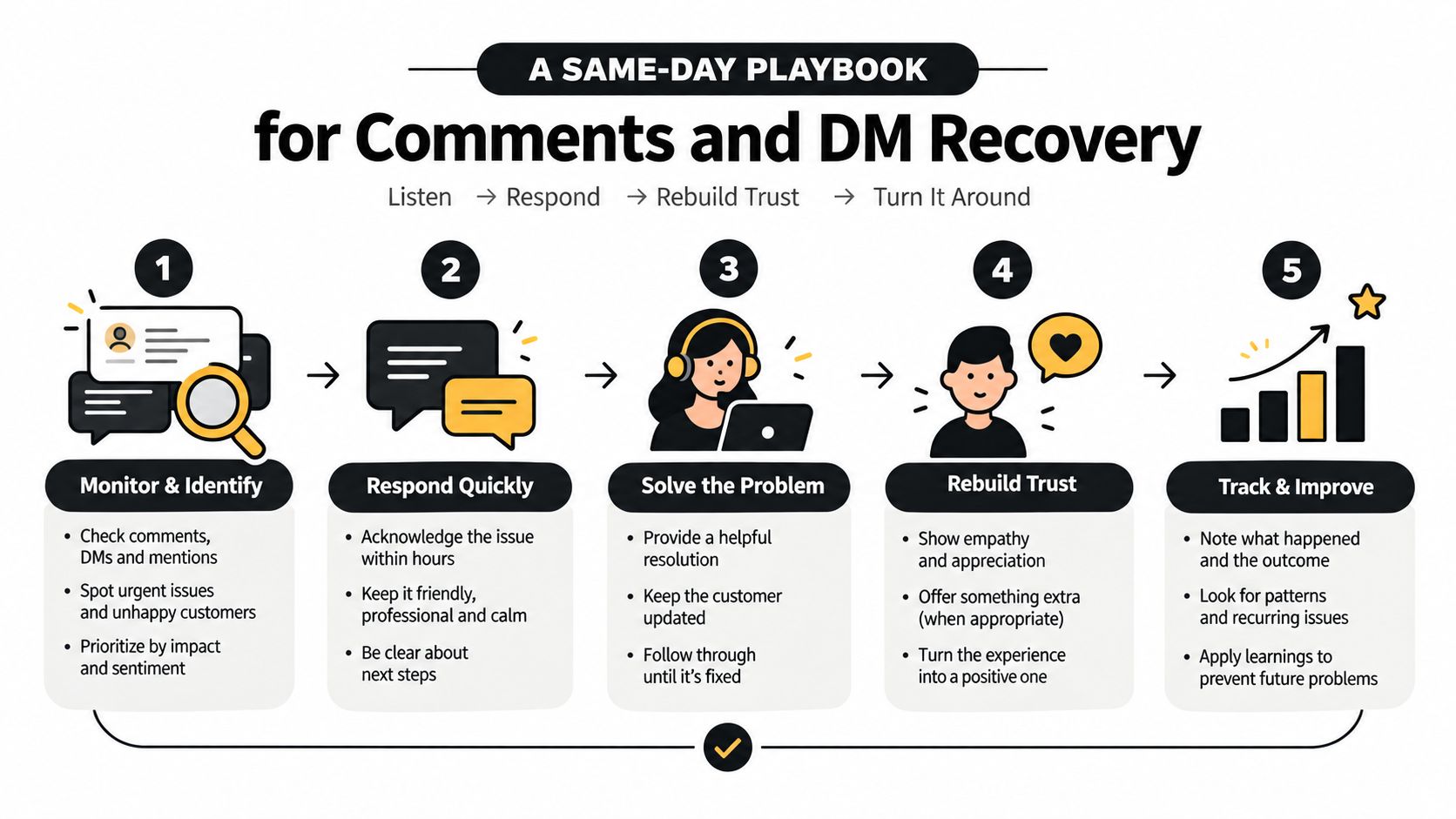
Moderation protects the buying context as well as the brand surface. Filter scams, slurs, hostile bait, and irrelevant promotions. Route ambiguous cases to a human, while genuine product questions continue through the sales workflow. A fast response is useful only when the system can distinguish intent from risk.
For an Instagram-specific build, follow this Instagram DM automation workflow for practical trigger, reply, and escalation patterns. Test the complete path with real comment types before applying it to every campaign.
Choosing a Vendor and Getting the Architecture Right
The wrong architecture loses revenue before anyone reviews the dashboard. A system that generates polished replies but cannot ingest Meta and TikTok ad comments, sync product data, or connect conversations to orders leaves the storefront active while buyer intent expires.
Start with ownership of the sales surfaces. A serious shortlist should handle comment ingestion, native DM automation, website chat, CRM and commerce sync, ad-platform event uploads, brand-voice rules, and clear human handoff paths. Ask how each capability works in production, not whether it appears on a feature page.
Test the action layer
Require a complete workflow demonstration:
A buyer comments on an ad.
The system classifies the intent.
It replies publicly within approved rules.
It opens or continues a private conversation.
It sends the correct product or checkout link.
It records the interaction and order attribution.
A human takes over when judgment is required.
The test should include a useful product question, an ambiguous comment, and a hostile or unsafe message. If the demonstration ends with a public reply, you are assessing text generation rather than a revenue workflow.
Find the hidden constraints
Webhook limits, rate quotas, permissions, data retention, and channel-policy changes can weaken a sound design. A chat widget attached to a system that does not own the comment section creates another queue and splits the customer record. That gap matters during the 24-hour window after paid traffic creates demand.
Data readiness also sets a ceiling on accuracy and trust. Confirm who maintains product facts, offer rules, inventory status, and approved claims. Ask what happens when those records conflict. Governance should cover access, review, escalation, and deletion before the system handles a high-volume campaign.
Integration checklist
Ad access: Confirm permissions for every Meta and TikTok account.
Product truth: Sync names, prices, variants, inventory, and offer rules.
Checkout paths: Map each intent category to the correct URL.
Attribution: Define UTM values, event names, and order matching.
Escalation: Specify when a human must approve or take over.
Auditability: Store messages, actions, timestamps, and outcomes.
Retention: Set rules for customer data, transcripts, and deletion requests.
Operations: Assign someone to review failures and tune workflows weekly.
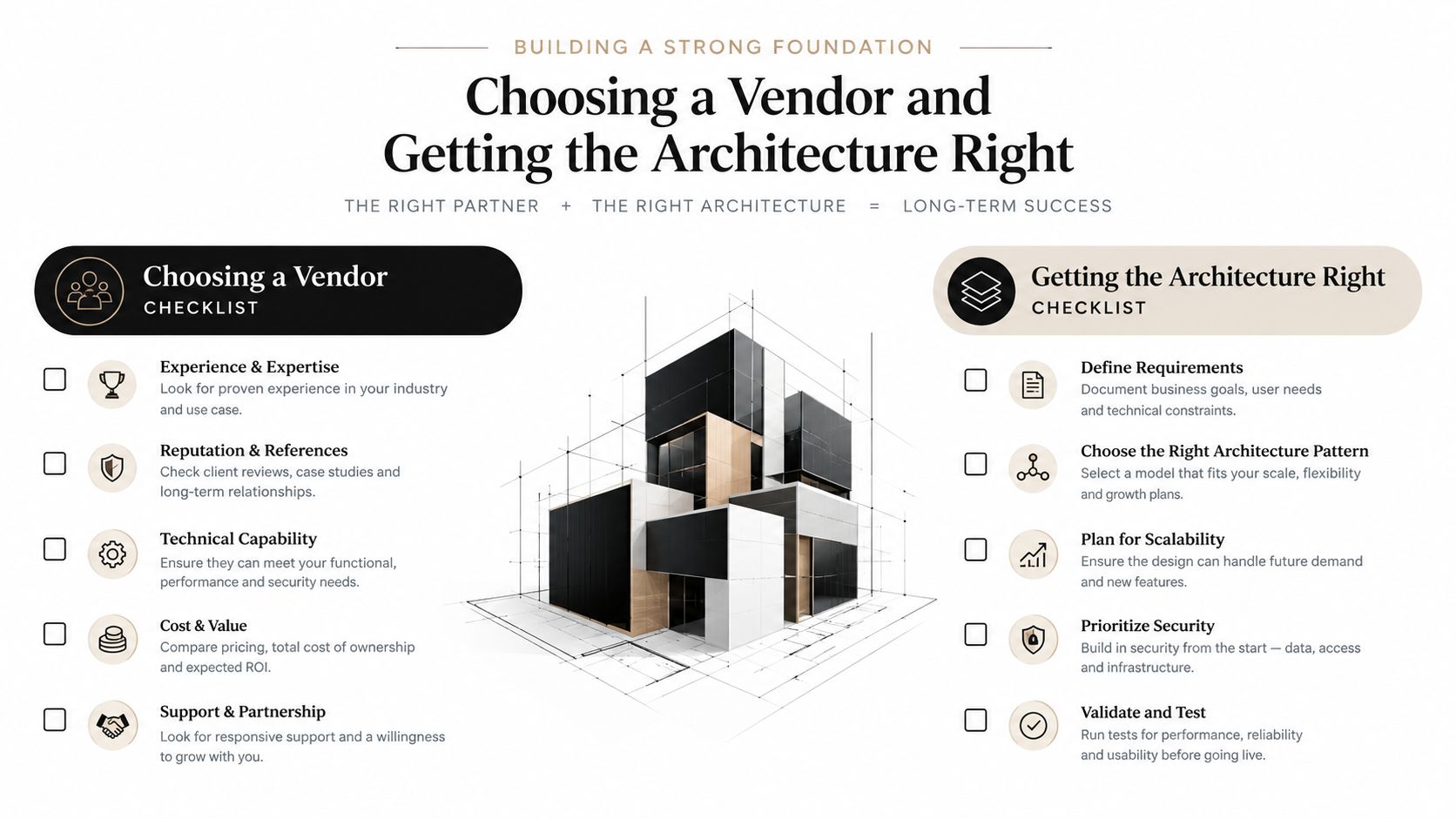
Review AI customer engagement software with three questions: who owns each customer surface, where does each data handoff occur, and how will the team connect the conversation to revenue? A vendor earns a place in the stack only when it can answer all three clearly.
Metrics That Prove the System Is Working
A dashboard should answer one financial question first: how much revenue did the AI employee recover or influence that would otherwise have remained unattributed?
Build the measurement stack from the order backward. Match orders to comment and DM threads, cart recovery flows, product links, and lead outcomes. Then separate direct recovery from assisted revenue, because a buyer may interact with the system without completing the order in the same session.
Layer the dashboard
Layer one, recovered revenue: Track orders attributed to AI-handled comments, DMs, cart flows, and post-purchase sequences. Include order value, product, campaign, and channel.
Layer two, response velocity: Measure first response on Meta and TikTok comments, DM reply latency, and the share of inbound messages answered within five minutes. Speed is a leading indicator, not the final result.
Layer three, conversion: Monitor DM-to-checkout rate, comment-to-purchase rate, and recovered cart rate against a pre-automation baseline. Segment by campaign and intent category so a strong overall number doesn't hide a weak product flow.
Layer four, ad feedback: Review comment sentiment, post-comment engagement, and quality-ranking signals. Moderation and useful answers should improve the buying environment, not merely reduce visible activity.
Tie the layers to blended ROAS and MER in the weekly review. If recovered revenue rises but contribution margin falls because the offer is too aggressive, the workflow needs correction. If response speed improves without checkout movement, inspect the qualifier, product routing, and landing experience.
Layer | Metric | Target Benchmark | Source |
|---|---|---|---|
Revenue | AI-attributed recovered orders and revenue | Establish a clean baseline, then trend upward | Order data and conversation logs |
Velocity | First-response time | Move toward immediate handling for approved intents | Meta and TikTok inbox records |
Engagement | Messages answered within five minutes | Set an operating target by account capacity | Inbox analytics |
Conversion | DM-to-checkout and comment-to-purchase | Compare by campaign and intent | Checkout and attribution events |
Recovery | Abandoned-cart recovery rate | Compare against the pre-automation baseline | Cart and order data |
Ad feedback | Sentiment and quality signals | Improve relevance while reducing harmful content | Comment moderation and ad reporting |
Finance | Blended ROAS and MER | Defend incremental contribution in weekly review | Ad spend and finance records |
A hypothetical example can show the method without pretending to know the brand's average order value. A brand spending $20,000 per month on Meta, with 1.8% of abandoned carts recovered and 3.4% of inbound DMs converting, should calculate two separate revenue pools:
Recovered-cart revenue: abandoned carts multiplied by 1.8%, then multiplied by average order value.
DM revenue: inbound DMs multiplied by 3.4%, then multiplied by average order value.
Add those pools, subtract the attributable costs of the program, and compare the result with the account's baseline. The conversion attribution framework helps keep those calculations tied to actual events rather than optimistic engagement counts.
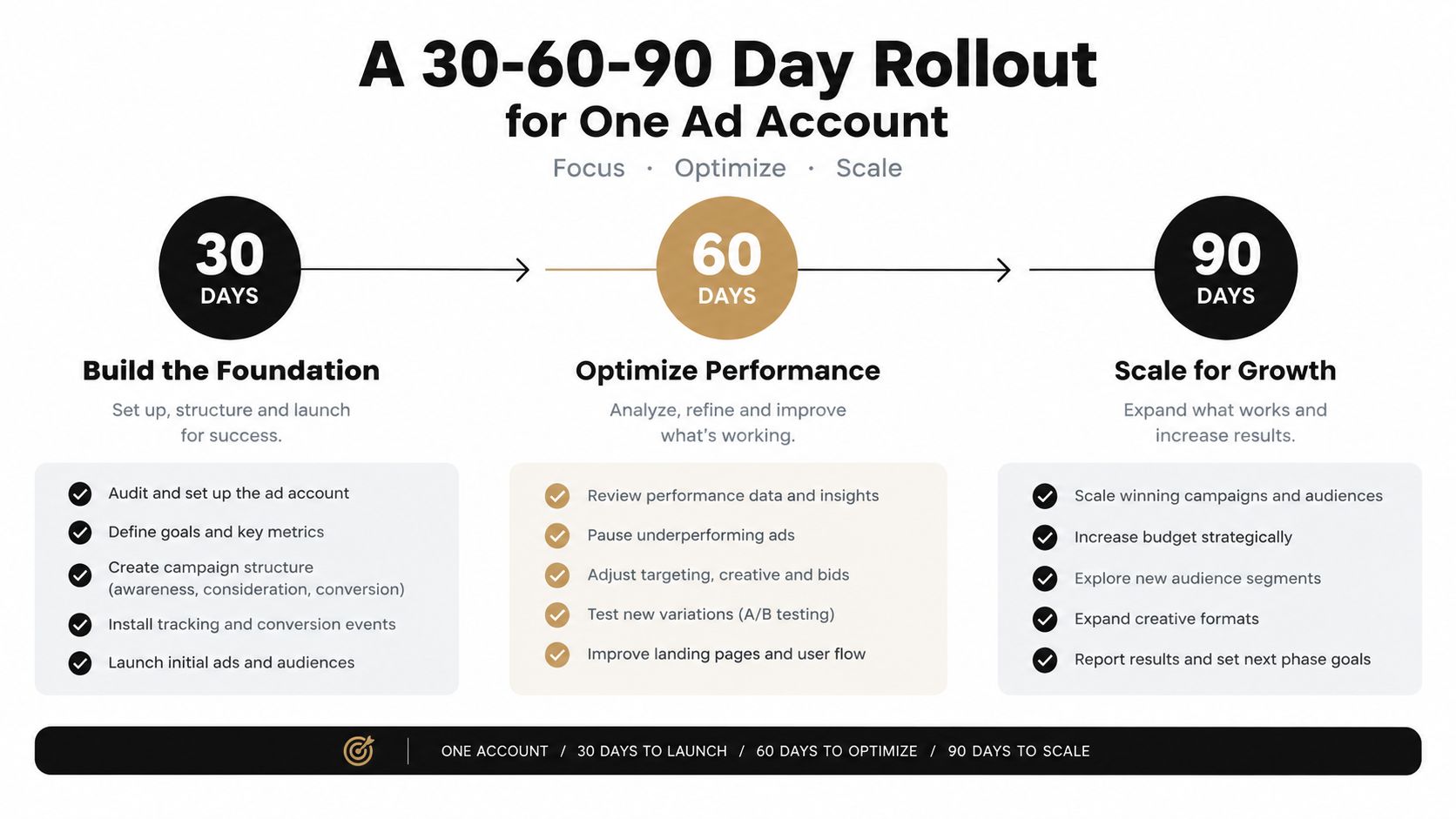
A 30-60-90 Day Rollout for One Ad Account
A controlled rollout protects live performance. Start with one account, one high-volume product group, and the clearest revenue leak in its comments, DMs, or checkout flow.
Days 1 to 30
Connect Meta and TikTok comment streams. Configure triggers for pricing, stock, delivery, and product-fit questions. Turn on cart recovery for the top SKUs. Log every reply, link click, escalation, and order so the team can trace each conversation to an outcome.
Review four controls:
Coverage: Do relevant comments and DMs enter the workflow?
Accuracy: Does the system use current prices, inventory, and offers?
Safety: Do sensitive complaints and uncertain replies reach a person?
Attribution: Can the team connect a conversation to checkout or an order?
Days 31 to 60
Add lead qualification and connect the CRM. Establish baselines for response time, DM-to-checkout rate, comment sentiment, and cart recovery. Tune the questions before adding more messages. Effective flows ask less, route better, and escalate sooner, especially while the 24-hour buying window is still open.
Advance only when the team can explain why a reply was sent, where the buyer went next, and whether the event produced revenue.
Days 61 to 90
Expand the proven workflow across additional accounts. Use sentiment and conversion data to tune prompts, product routing, moderation rules, and escalation thresholds. Document approved answers, prohibited claims, ownership rules, and weekly review responsibilities. Every account should inherit a tested process, not a vague promise that AI will handle engagement.
Exerta deploys AI employees across Facebook, Instagram, TikTok, and website chat, with SMS, email, and voice planned next. Its system handles comment and DM replies, moderation, sales recovery, and logged attribution, and is used by 250+ brands, with an average 15% sales lift, $2M+ in recovered revenue, and 99.9% uptime. These product results should be assessed against your baseline, margins, channel permissions, and governance requirements.
Start the next account with one intent category and one revenue event you can verify. That discipline exposes weak routing early, before unanswered storefront comments and slow DMs drain another campaign.
Exerta gives DTC brands and agencies AI employees that answer comments and DMs, moderate harmful content, route qualified buyers to checkout, and attribute recovered revenue across Facebook, Instagram, TikTok, and website chat. Visit Exerta to see how paid-social conversations can become a measured sales workflow before the next high-intent comment expires.