Guide
Chat Messages Limit Reached TikTok: Fix It in 2026
Chat messages limit reached tiktok - Hitting the chat messages limit reached on TikTok? Learn quick fixes, reset tips, and how to avoid the cap with our
11 min read
read
·


Your buyer just DMed the price, your team answered fast, and then the thread stalls. The next follow-up throws chat messages limit reached TikTok back at the operator, and the lead goes cold while intent is still warm. That's not random friction, it's the platform telling you the conversation has crossed a policy boundary.
For DTC and ecommerce brands, that boundary matters because TikTok inboxes now sit in the middle of paid traffic, recovery flows, and comment-to-DM handoffs. If your team treats the error like a device glitch, you'll keep restarting the app and missing revenue. If you treat it like part of TikTok's messaging architecture, you can pace sends, keep the sequence inside the window, and preserve the sale.
Table of Contents
Why TikTok Cuts You Off Mid-Conversation
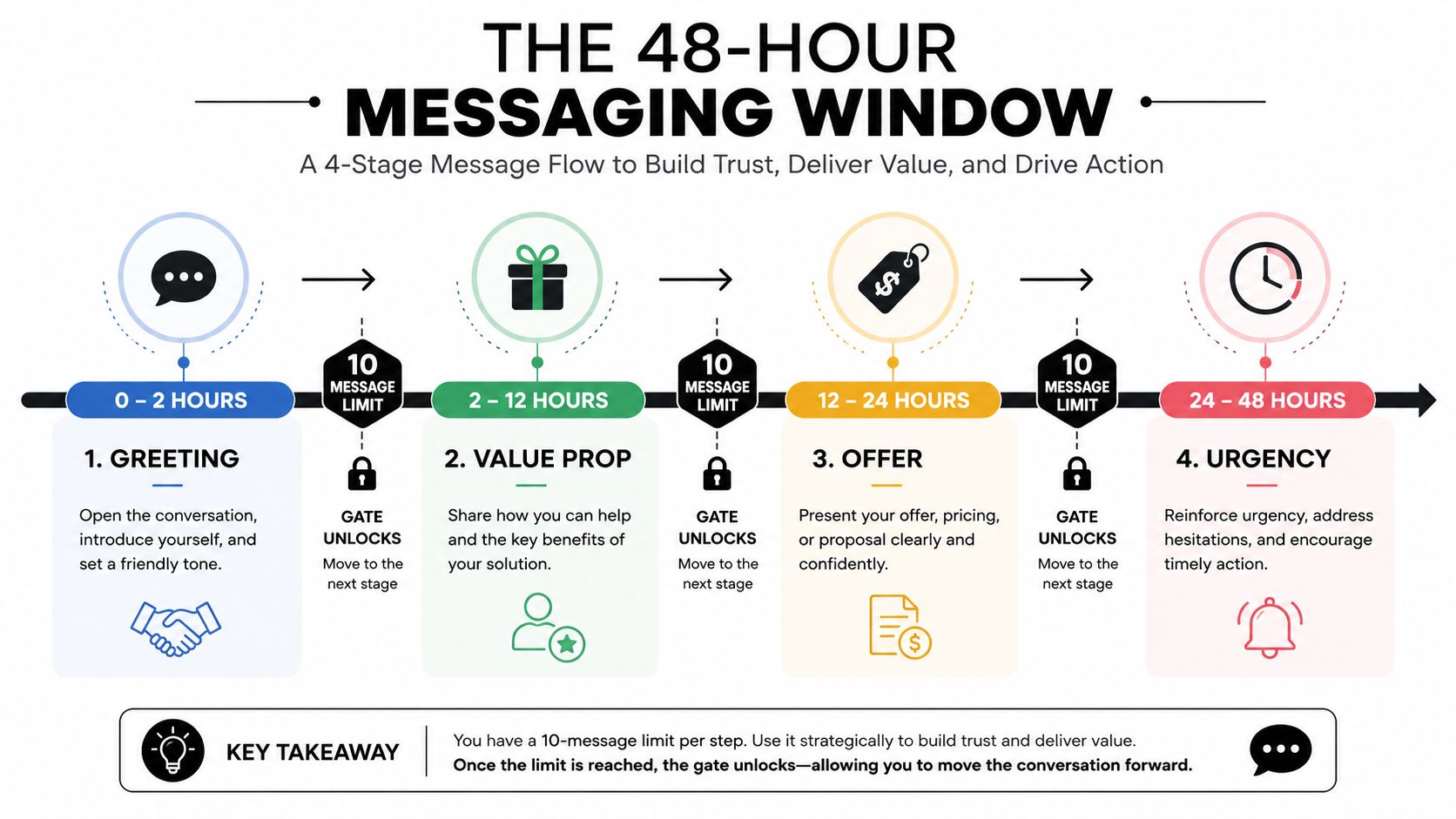
A buyer sends a DM at night asking whether the bundle is still available. Your team replies in the morning, drops the offer, and tries to send one more follow-up with the checkout link. That's where the thread can stop, because TikTok's business-channel documentation ties messaging to a 48-hour window and allows 10 consecutive messages inside it documentation. The cap isn't a bug, it's a control surface.
The inbox is now a sales lane
That change matters because the inbox is no longer just a creator comment box. It's where ad spend gets converted into a sale, where lead intent gets recovered, and where support staff keep a buyer from drifting away. Once you understand that, the error makes more sense. The platform is limiting repetitive outreach and pushing brands to keep replies structured instead of noisy.
Practical rule: if the buyer hasn't replied, every extra message has to earn its place.
The same 10-message / 48-hour pattern shows up in omnichannel guides that integrate TikTok messaging, which is a strong signal that operators should plan around the cap instead of hoping it disappears. For teams running paid traffic into comments and DMs, that means the first messages are the most valuable ones. You don't get unlimited persuasion. You get a short window to qualify, offer, and close.
That's also why this feels different from the older creator-era view of TikTok. Brands now use the inbox like a checkout lane, and checkout lanes don't reward clutter. If your sequence is built like a long nurture chain, you'll burn through the quota before the buyer takes action. If it's built like a tight sales path, you can stay inside the policy and keep moving.
For a related lens on protecting outbound behavior and brand safety, see the internal note on brand reputation protection.
Immediate Fixes You Can Run Today
The fastest recovery path is usually not dramatic. Independent troubleshooting guides consistently point to waiting about 24 hours, with some advising 24 to 48 hours before trying again video guide. That tells you the error is often temporary, not a permanent account ban. If the conversation can wait, let it cool down and retry once the window has had time to reset.
Run the account-side checks in order
Start with the simple things that often get missed. Clear cache, free up space, log out, log back in, and update the app before you try the message flow again support guide. These steps matter because app-state issues can look like a policy block when they're really a client-side problem. If the send works after that, you've fixed the issue without touching the account strategy.
Step | Action | Wait time | Success signal |
|---|---|---|---|
1 | Pause the thread and retry later | About 24 hours, or 24 to 48 hours if needed | The send goes through without the warning |
2 | Clear cache and free space | A few minutes | The app stops failing on repeat sends |
3 | Log out, log back in, update the app | A few minutes | The DM flow resumes normally |
4 | Reinstall the app if needed | Longer, last resort | The device sends messages again |
If you want a parallel example of how send limits shape behavior on the platform, the article on TikTok following limits in 2026 is useful context. The mechanics are different, but the operating lesson is the same, repetitive activity gets checked, and recovery usually starts with pacing.
The stop point is important. If the lead is hot and the message still won't send after these fixes, move the prospect to another channel instead of waiting indefinitely. You can't afford to leave a buyer hanging because an app state issue is masking a policy limit. For teams already connecting TikTok into their support stack, the internal integration note on TikTok workflows is the place to review how that handoff should happen.
How the 10-Message Rule Shapes Your Sequence
The 10-message cap inside a 48-hour window forces sequence design to behave like budgeting. A four-message path gives you room to think. A six-message path burns a big chunk of the allowance before the buyer even clicks. Anything longer starts to feel fragile because you're pushing on a fixed quota, not a casual inbox.
Build for one job per message
A TikTok sales flow usually tries to do too much at once. Greeting, qualification, offer, link, and follow-up can all fit inside the window, but they can't all be bloated. Each line needs a single job. If a message confirms intent, don't also try to educate, persuade, and close in the same breath. That's how teams waste quota.
A simple way to think about it is by message budget. Four focused sends leave room for clarification. Six sends leave little slack. Ten sends mean the sequence has no margin for repetition, so the copy has to be tight and the timing has to be deliberate. The cap isn't just a limit, it's a pacing rule.
A worked flow for a DTC skincare brand
A skincare brand running comment-to-DM ads can structure the thread like this. First, confirm the product the buyer asked about. Second, handle the top objection, usually price, shade, or fit. Third, send the checkout link with the offer in one clean sentence. Fourth, ask for a one-word reply so the thread can re-open if the buyer hesitates.
That structure matters because the sequence itself becomes a control system. The first message opens the conversation. The second removes friction. The third converts intent into a click. The fourth buys the brand another chance to react without wasting space. If the buyer replies with a real question, that response earns room. If not, the next follow-up should be measured, not repetitive.
For a deeper breakdown of how the inbox window affects timing, the internal guide on the 24-hour DM window fits the same operational model. Treat every message as part of a finite quota, and the cap stops looking like random friction.
Why High-Volume Brands Hit the Cap More Often
A lot of operators blame the phone first. That's usually the wrong starting point. TikTok's own behavior controls are built to reduce spam and abuse, and excessive message frequency or harassing, unsolicited content can trigger restrictions policy discussion. Frequent senders, new accounts, and accounts acting too aggressively are the ones most likely to run into the wall.
Repetition is what gets noticed
If a brand sends the same copy over and over, the pattern stands out. If reply rates stay low while send volume climbs, the account starts to look less like support and more like broadcast. That's where the cap turns from an occasional annoyance into a structural problem. The issue is not the device. It's the behavior profile.
High-volume outreach needs pacing rules, not hope.
For agencies, the risk is broader because one client's habits can shape how the whole operation feels day to day. When multiple brands share the same workflow discipline, repeated copy and loose triggers tend to spread. The fix is to separate fast response from loud response. Use consent-aware prompts. Don't blast identical lines from fresh accounts. Keep triggers tied to real buyer actions, not just a calendar.
A useful internal benchmark for operators is simple. Watch for rising send volume, weak reply rates, and repeated identical copy. Those are the signals that need pacing. The section above covered the immediate recovery playbook. This one is about preventing the account from becoming the reason the playbook gets used in the first place.
For a broader lens on monitoring behavior across channels, the internal guide on best social media monitoring tool connects cleanly with this problem because visibility is what lets you catch risky send patterns before TikTok does.
Manual Teams vs Simple Bots vs AI Employees
Manual teams can write better replies than anything else on the market, but they can't beat the clock on every thread. A buyer messages at night, an ad spikes interest, and someone still has to be online, informed, and ready to answer before the 48-hour window becomes a constraint. That works for a small inbox. It breaks under load.
Three staffing models, three trade-offs
Model | What it does well | Where it fails |
|---|---|---|
Manual team | Nuance, judgment, escalation | Coverage gaps, slower pacing |
Simple bot | Fast first response | Weak context, poor recovery design |
AI employees | Instant replies, pacing, routing | Needs setup and oversight |
Simple bots are good at speed and bad at judgment. They can greet, deflect, and bounce a buyer through a narrow script, but they often ignore the message cap until the sequence is already too long. That's where AI employees are different. They pace replies, keep track of how much of the window is left, and move high-intent buyers toward checkout before the budget is spent.
Operational edge: the right automation doesn't just answer faster, it sends less waste.
Exerta documents 250+ brands, a 15% average sales lift, $2M+ recovered revenue, and 99.9% uptime, with channels live today across Facebook, Instagram, TikTok, and website chat Exerta. Those numbers matter because they point to a working operating model, not a theory. The platform category here is AI employees, not rigid bots, and that distinction is what helps teams stay inside policy while still moving revenue.
For a plain-language breakdown of how that category works inside the inbox, the internal article on what an AI employee actually does all day is the right companion read. If you're evaluating outside the platform space too, a practical starting point is to browse TikTok agent tools, then compare every option against pacing, attribution, and escalation, not just reply speed.
A Recovery Flow That Stays Inside the Window
A usable recovery sequence doesn't need to be clever. It needs to be short, clear, and hard to break. If the buyer already DM'd and the window is still open, the best move is to compress qualification, offer, and checkout into as few sends as possible.
Use a four-step message budget
Acknowledge and qualify. Confirm the product or offer the buyer asked about, then ask the one detail that decides whether the sale can move forward.
Handle the top objection. Answer the most likely blocker, usually price, fit, timing, or shipping.
Send the link. Put the checkout path in the same message as the offer, so the buyer doesn't have to scroll for it.
Ask for a one-word reply. Use a simple prompt that keeps the thread alive without burning another full explanation.
That sequence works because each message carries one decision point. It respects the cap and keeps the thread from drifting into a long back-and-forth. If the buyer asks for a human or raises a complaint, stop the automation immediately and route it. Burning the rest of the quota on an unhappy customer is the fastest way to make a recoverable lead unrecoverable.
AI employees can compress this further when intent is already hot. Instead of sending four separate messages, they can combine the right pieces into one coordinated reply and leave room for follow-up later in the window. That's the value of pacing, not just speed. The system preserves intent instead of spending it all at once.
Preventing the Error and Protecting Pipeline
The best operators stop treating the cap like an outage and start treating it like part of the workflow. That shift changes how the inbox is staffed, how sequences are written, and how leads are handed off when the thread gets tight. Brands that do that recover more revenue because they keep the conversation moving instead of waiting for a fix.
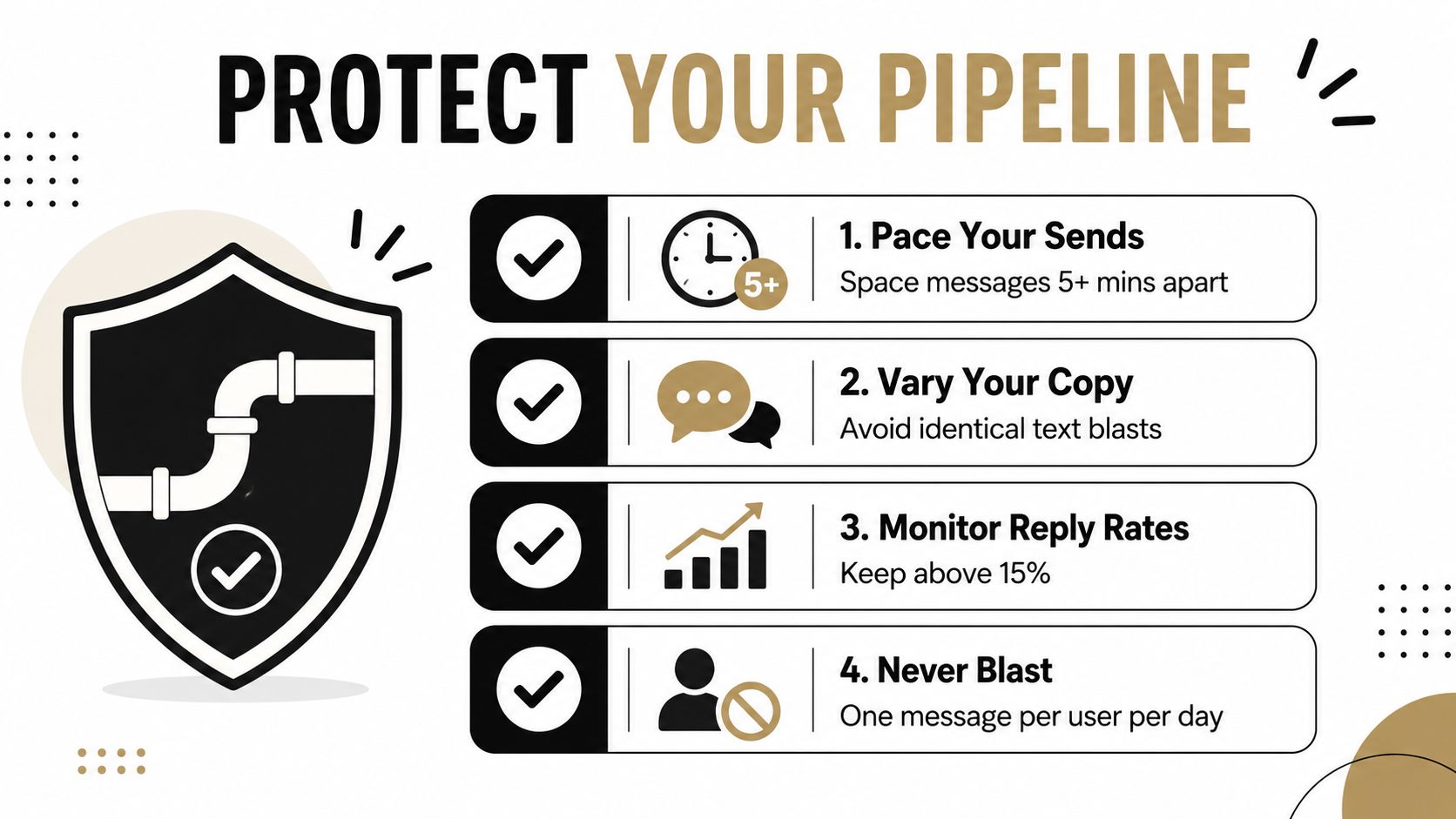
Pin the operating checklist
Pace Your Sends: Space messages out instead of stacking them back to back.
Vary Your Copy: Avoid identical blasts that make the account look mechanical.
Monitor Reply Rates: Weak replies tell you the flow needs work before TikTok does.
Never Blast: Keep sends targeted, one message per user per day unless the conversation naturally continues.
The long-term habit that matters most is visibility. Every message should be logged so the team can see when the cap was hit and which workflow caused it. Comments and DMs need the same urgency because attention decays even when the policy window doesn't. And when the conversation can't be kept inside the 48-hour boundary, keep an alternate channel warm so the lead doesn't disappear.
A clean operating model does more than avoid errors. It protects pipeline, keeps buyers from getting stuck, and gives media buyers a way to scale without breaking the inbox. That's the point. The cap is real, but it doesn't have to slow revenue if the workflow is built around it.
If TikTok DMs are stalling your recovery flows, Exerta can take over the pacing, replies, moderation, and handoff work with AI employees built for paid social inboxes. Visit Exerta to see how teams use it to keep TikTok conversations inside the window and turn more comments and DMs into tracked revenue.

