Guide
Best Social Media Monitoring Tool for Paid Ads in 2026
Find the best social media monitoring tool for Meta and TikTok ads. Compare features, pricing, and workflows to protect ad spend and recover revenue.
11 min read
read
·


Most advice on the best social media monitoring tool starts from the wrong premise. It treats monitoring as a listening problem. For paid social teams, that's too small. A comment thread under a winning ad is not a dashboard issue. It's an operational problem that can drain margin, waste media spend, and let high-intent buyers slip away before anyone replies.
That matters more now because social is massive. DataReportal reported 5.61 billion social media user identities worldwide in October 2025, equal to 67.9% of the global population, with average daily usage at 2 hours 21 minutes per person. That scale is why monitoring moved from a nice-to-have listening layer into core brand operations software, especially for teams managing paid social, customer support, and reputation at once.
For Meta and TikTok advertisers, the question is simpler. Which tool helps a team reply, moderate, escalate, and recover revenue without turning the comment section into a bottleneck?
Table of Contents
Real Scenarios Where Monitoring Tools Protect or Fail Ad Campaigns
Our Recommendation for DTC Brands and Agencies on Meta and TikTok
Why Most Monitoring Tool Roundups Fail Paid Social Teams
Most roundups rank tools by source breadth, sentiment charts, and mention volume. That helps if your job is reputation research. It misses the core work for performance marketers. A media buyer doesn't wake up worried about a clean dashboard. They wake up to a comment pile under a creative that's still spending, a DM queue that's gone stale, or a wave of replies that make a strong ad look risky.
Practical rule: if the tool can't help the team act on comments and DMs fast, it's not solving the main paid social problem.
That's why the category definition matters. Social media monitoring is software that tracks, analyzes, and reports on brand mentions and audience sentiment across social platforms. But for ad teams, the benchmark isn't just listening coverage. It's speed, sentiment classification, and reporting depth, because those are the pieces that decide whether a conversation gets handled before it hurts performance.
The more useful reviews now classify tools by real-time monitoring, sentiment analysis, competitor benchmarking, and automated reporting, which reflects a mature market, not a keyword tracker with a nicer interface. One industry review also frames monitoring as a way to catch spikes, crises, and trends before they become problems, while analytics suites have expanded into attribution and performance reporting across organic, paid, and competitor activity. That's the right direction, but paid teams need one more filter. Can the platform support the daily workflow of moderation, escalation, and revenue recovery?
The strongest teams I've worked with don't treat the comment section like a side channel. They treat it like part of creative. Bad replies can drag down the perceived quality of a winning ad. Fast replies can turn objections into purchases. That's the operational lens most lists ignore.
Read more on why unanswered ad comments are costing you sales
The Evaluation Criteria That Matter for Ad Teams
Generic social listening checklists ask whether a tool tracks mentions, sentiment, and competitors. Paid social teams need a different scorecard. The right tool has to cut response time, protect the ad from avoidable backlash, and help the team recover demand from comments and DMs without adding another tab people forget to open.
Paid Social Monitoring Evaluation Criteria
Criterion | Why It Matters for Paid Ads | What to Look For |
|---|---|---|
Response speed | Fast replies stop objections, spam, and buyer hesitation from sitting under live spend. | Real-time alerts, unified inboxes, and quick assignment flows. |
Moderation depth | Toxic or off-brand comments can hurt trust and make a strong ad look weak. | Hide, filter, escalate, and approval controls. |
Cross-channel coverage | Ads do not live in one place, and buyers do not only comment in one place. | Coverage across Facebook, Instagram, TikTok, and web chat, plus room for more channels later. |
Revenue recovery | Some comments and DMs are not just noise. They are buying signals. | Intent detection, link delivery, follow-up workflows, and attribution to closed revenue. |
Workflow automation | Manual triage burns time and breaks consistency across clients or campaigns. | Rules, branching logic, escalation paths, and audit trails. |
The operational lens is the key difference. Reviews of the category increasingly split tools into those that act as primary intelligence systems and those that serve as a support layer for teams that need to move fast. That split matters because broader coverage is not always better. A team can track every mention in the world and still miss the comment thread that is bleeding conversions.
There is also a source problem buyers keep running into. Many roundup pages now present long lists, comparison tables, and product-led summaries, which shows a crowded, feature-differentiated market rather than a single universal winner. That is useful, but it also means procurement should be grounded in workflow fit, not feature count.
One more thing to keep in mind. Independent Spanish roundup pages also group tools by use case and feature scope, separating real-time monitoring, free keyword alerts, and deeper cross-channel analysis. That tells you the market is already segmented by operational need, not by one generic “all-in-one” promise.
Exerta's moderation workflows show the direction paid teams should care about, because they connect comment handling, DMs, moderation, and recovery flows in one place.
Short version: if a platform cannot unify mention tracking, sentiment analysis, and reporting in one workflow, it is not built for paid social operations. It is built for observation.
Top Social Media Monitoring Tools Compared
The right setup depends on the job. Paid social teams should rank tools by response first, not by listening breadth. That changes the question from, “How much can it see?” to, “How much revenue and time can it protect?”

Exerta fits teams that need AI employees to handle comments, DMs, moderation, and recovery flows on Facebook, Instagram, TikTok, and website chat. It works best when conversation volume affects revenue directly. The value is action, not just reporting. See how moderation workflows connect to response speed
A listening-first tool is useful when the team needs broad mention tracking across many sources. It gives a fast read on what people are saying and helps with general monitoring. The trade-off is simple. If the queue is filling with customer questions, spam, or hostile replies, a listening layer by itself does not clear it.
A response-first agent is built for work flow, not observation. It routes comments, surfaces DMs, flags risky posts, and keeps moderation moving before threads snowball. That setup matters most for paid social teams, because the comment section sits under the ad and shapes how the next viewer reads the offer.
Another split shows up in cross-functional teams. Some tools sit inside a broader marketing dashboard and help with publishing, engagement, and reporting. That works for social managers who need one place to coordinate channels. The trade-off is that monitoring can stay tied to the management workflow instead of the revenue workflow.
Campaign tracking tools serve a narrower use case. They are useful for launch tags, creator activations, and hashtag monitoring, especially when the goal is to see how a theme spreads over time. ConsorcioTec describes one hashtag-focused option as strong for tracking how tags and company names evolve over time. That kind of setup helps measurement. It still does not replace a system built to handle replies, moderation, and recovery.
What separates these approaches is not whether they all monitor. It is whether they help a team act. If the goal is reputation and reach, broader listening can be enough. If the goal is ad comments, moderation, and fast recovery, the tools that close the loop matter more.
Real Scenarios Where Monitoring Tools Protect or Fail Ad Campaigns
A creative hits. Spend climbs. Comments start coming in faster than the media buyer can open them. Some are legitimate questions. Some are spam. A few are hostile replies that make the ad look less credible to everyone else scrolling underneath.
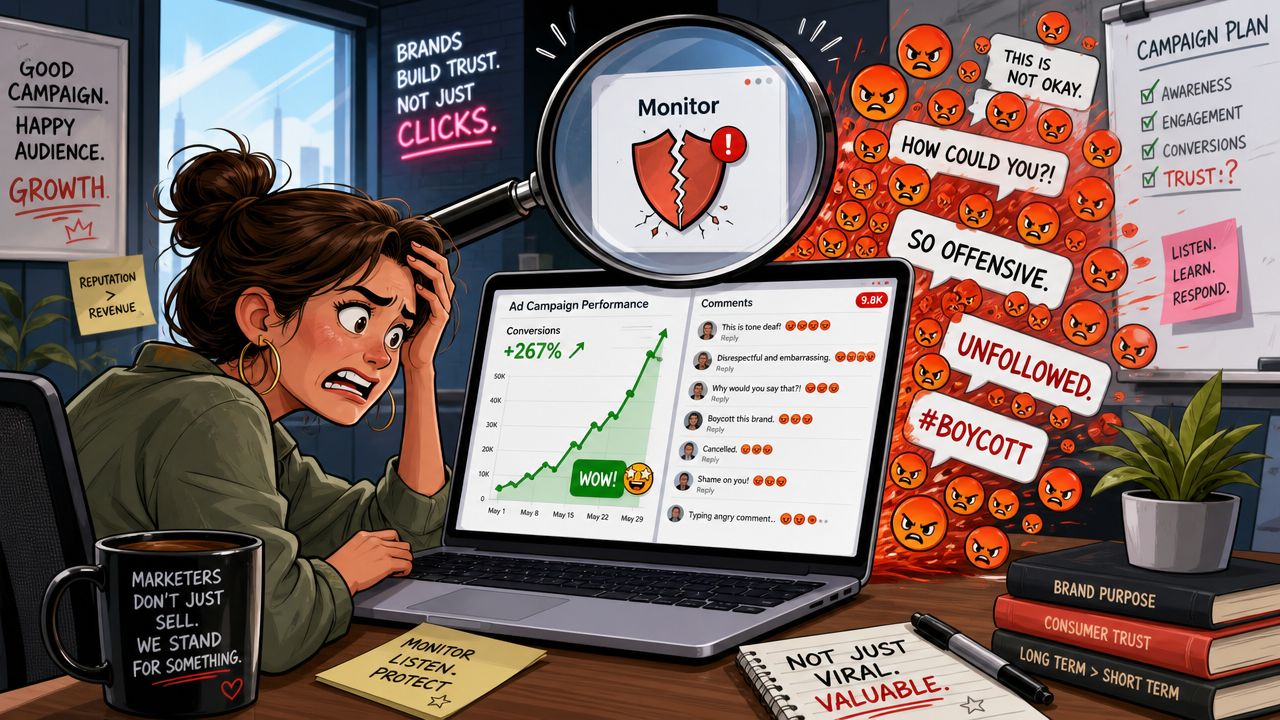
When the ad is working but the comments are not
A monitoring tool that only surfaces mentions helps you notice the problem. It doesn't fix it. The better setup routes spam into moderation, flags buyer questions for fast replies, and escalates anything risky before the thread snowballs. That protects the ad from looking unmanaged while the campaign is still in market.
When a product launch creates objections in public
Launch comments often repeat the same three friction points. Price. Fit. Delivery. A team that can spot those patterns quickly can answer once, then reuse the same response logic across the thread. That's the difference between a comment section that clarifies the offer and one that keeps raising the same doubts.
When direct messages become the real sales desk
DMs are where high-intent buyers ask for sizing, stock, terms, or a checkout path. If those messages sit overnight, the opportunity gets colder. The operational fix is not more reporting. It's a workflow that can detect intent, send the right link, and keep the handoff clean when human review is needed.
See how escalation rules keep issues from stalling
When competitor links flood a TikTok campaign
Competitor replies and off-topic links can hijack a comment thread fast. A listening tool may show the trend later. A response-first workflow can hide spam, surface legitimate objections, and keep the campaign readable for real buyers. That's not just brand hygiene. It keeps the ad from becoming harder to trust.
The pattern is consistent. Monitoring only helps if it shortens the distance between signal and response. If your team still has to copy-paste notes between tools, the delay becomes part of the problem.
How to Choose the Right Tool for Your Team and Ad Spend
The right choice comes down to three things. Team size. Channel mix. How much of your job is observing versus responding. A solo media buyer doesn't need the same operating model as an agency with five clients and shared inboxes.
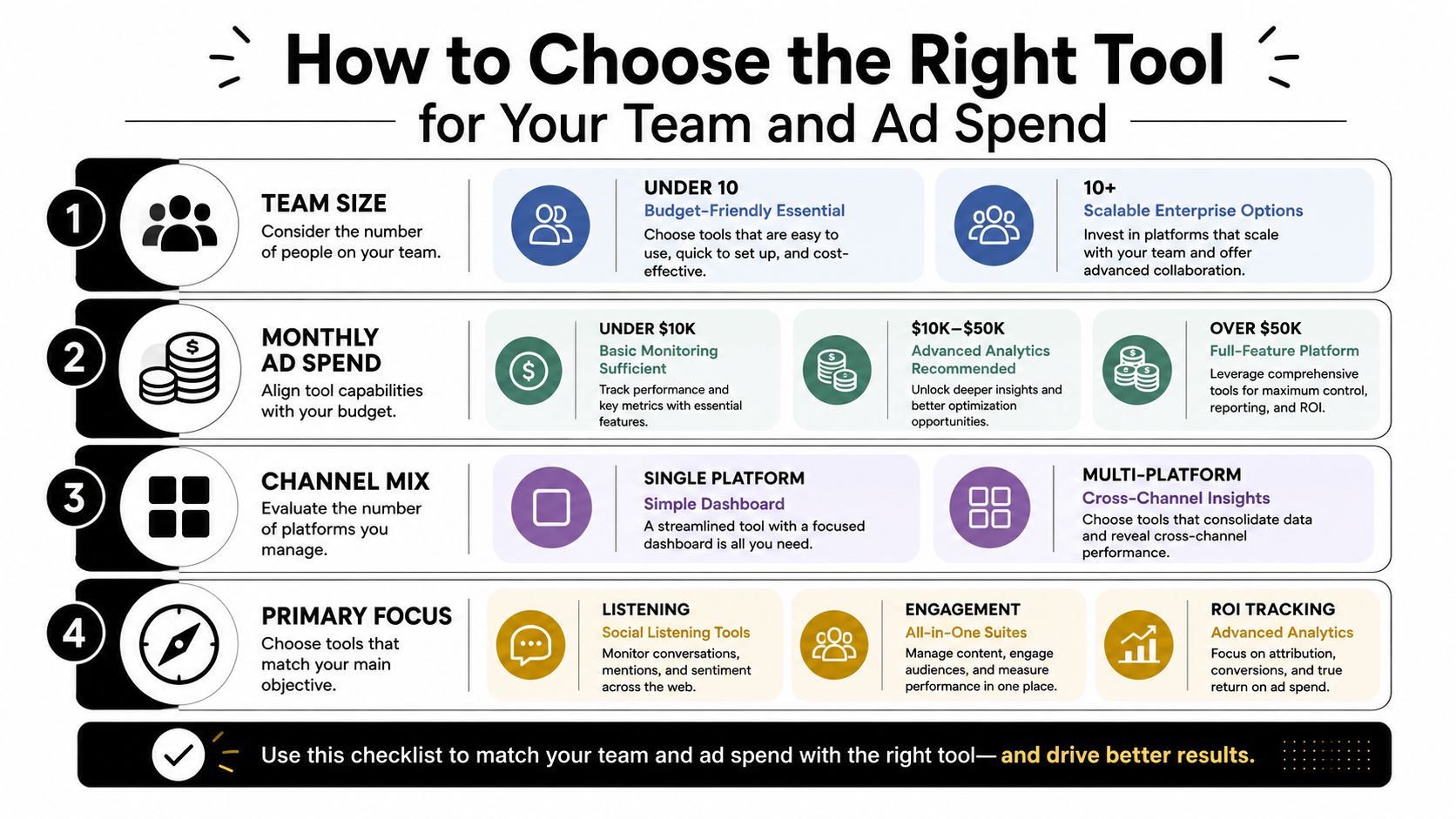
If your team is small
If fewer than 10 people touch social, keep the system simple. Choose a tool that gives you one place to see comments, DMs, and alerts, then lets you act quickly. Small teams usually don't need deep enterprise governance on day one. They need fewer clicks and fewer missed messages.
If your ad spend is scaling
As spend rises, the cost of slow response rises too. At that point, a dashboard that only reports activity starts to feel thin. Teams that are spending more need stronger automation, cleaner handoffs, and better visibility into which conversations are likely to turn into revenue.
If your channel mix is broad
Single-platform monitoring can work when one channel drives most of the business. Once Facebook, Instagram, TikTok, and web chat all matter, the tool has to unify them. That avoids the common failure mode where the team watches one inbox while revenue leaks through another.
Good buying rule: pick the platform your team will use every day, not the one with the longest feature list.
If your focus is listening, engagement, or ROI
If you mainly need listening intelligence, a broad monitoring tool can be enough. If the comment section is part of the funnel, choose something that supports engagement workflows. If you need revenue attribution, look for a platform that connects replies to outcomes and keeps the evidence inside the workflow.
Use this workflow automation guide to map the rest of your stack
The best fit is usually obvious once you remove vanity features from the conversation. If the tool won't help you answer, moderate, or recover sales, it's not the right tool for a paid social team.
The Hidden Costs of Choosing the Wrong Monitoring Approach
Bad monitoring choices don't fail loudly. They fail in small gaps. A comment sits unanswered. A DM gets seen late. A toxic reply stays live under an ad that's still spending. Each one looks minor in isolation. Together, they create avoidable cost.
One cost is team time. Manual comment triage eats hours that should go into creative testing, landing page work, and media optimization. Another cost is ad fatigue. When negativity stays visible, people scroll past the ad with more skepticism. That doesn't just hurt a single post. It changes the feel of the whole campaign.
A third cost is lost revenue from expired conversations. Social buyers don't wait forever. If a DM window closes or a lead question sits too long, the moment is gone. That's especially painful when the campaign was already converting traffic well.
The fourth cost is fragmented learning. If the team keeps insights in separate dashboards, they lose the pattern. The same objection gets answered five times. The same spam gets moderated by hand. The same buyer intent gets missed because nobody connected the dots.
Protecting brand reputation is part of the media plan
The better approach is to treat monitoring as an active layer of revenue protection. That means escalation paths, moderation rules, and response workflows, not just keyword alerts. It also means choosing a system that makes the next action obvious, so the team can respond before the thread hardens into a problem.
Our Recommendation for DTC Brands and Agencies on Meta and TikTok
For DTC brands and agencies spending real money on Meta and TikTok, the strongest best social media monitoring tool is the one that behaves like an AI employee. It should catch the comment, classify the intent, hide the junk, and help the team recover the sale without forcing a manual handoff for every interaction.
If your main need is broad listening, a generic monitor can still help. If your comment sections and DMs influence revenue, response capability matters more than breadth. That's the line I'd draw. Pick the tool that shortens the time between buyer signal and brand action.
For teams that want that operational layer now, Exerta fits the brief. It's built for Facebook, Instagram, TikTok, and website chat today, with SMS, email, and voice next. It already supports 250+ brands, has helped recover $2M+, and is tied to an average 15% sales lift with 99.9% uptime. Those numbers matter because they point to the right use case, recovery, not passive tracking.
Start with your highest-spend campaign and audit the comment section. If replies are slow, spam is visible, or DMs are going stale, the problem isn't creative alone. It's workflow. Visit Exerta and see how AI employees can reply, moderate, and recover revenue where your ads are already getting attention.

