7 Ways Replying to Comments on Instagram Converts
read
·

Replying to comments on Instagram converts best when every comment is routed by intent, risk, and urgency, rather than answered the same way. Buffer's 2026 analysis found that posts where creators replied to comments received about 21% higher engagement on average, based on more than 700,000 posts from nearly 68,000 accounts.
Your comment section is part of the ad. An unanswered buyer question can leave paid traffic without a next step. A visible scam can make a legitimate offer look unsafe. A thoughtful answer can recover a warm prospect, clarify an objection, or move a public conversation into a private channel.
The operating model is simple: reply to real questions, suppress harmful content, recover warm interest, and escalate cases that need a human. Exerta AI employees support this workflow across Instagram, Facebook, TikTok, and website chat, while the playbook below stays focused on Instagram. The strongest systems don't chase reply volume. They prioritize the comments most likely to affect revenue, trust, and campaign quality.
Table of Contents
1. Immediate Response to Buyer Intent Signals
Buyer intent in an Instagram comment is a revenue signal. “How much?” “Where do I buy it?” “Is this still available?” and “Does it come in black?” each ask for a clear next step, not a generic engagement reply.
Response speed affects conversion. Social customer-service benchmarks report that 76% of customers expect a response within 24 hours across social platforms (Kayako's social customer-service benchmarks). In a paid campaign, a timely public answer can remove friction while the prospect is still evaluating the offer. Delay sends the buyer to search, wait for support, or leave.
Exerta AI employees can scan comments for intent signals and use approved replies with product links, prices, shipping details, or offer codes. A skincare brand running a flash-sale post could answer a price question with the current price, a delivery question with the shipping policy, and an availability question with a direct checkout link. Answer the question first. Then give one clear action.
Build intent routes before templates
Start with the buyer language already appearing in the account. Create separate routes for new prospects, existing customers, support requests, and high-value leads. A new shopper may need a product page, while an existing customer may require order support and human escalation.
Set up the operating rules:
List high-intent phrases: Start with “how much,” “where to buy,” “still available,” and “does it come in,” then add product-specific wording from your comments.
Add dynamic fields: Insert the approved product URL, current price, shipping information, and offer code.
Connect attribution: Link Shopify attribution to identify which Instagram replies led to completed purchases.
Test the first response: Compare immediate replies with slower response windows, tracking clicks, purchases, and escalations.
Study buying intent: Use Exerta's analysis of buying intent to refine routing logic.
Lead generation follows the same intent-first approach. A telehealth advertiser can answer “How long does a consultation take?” with approved service details and a booking link, while routing medical questions to a qualified human. For teams capturing leads outside commerce, smart automation for Facebook lead gen applies the same routing logic.
2. Strategic Non-Response and Toxic Comment Suppression
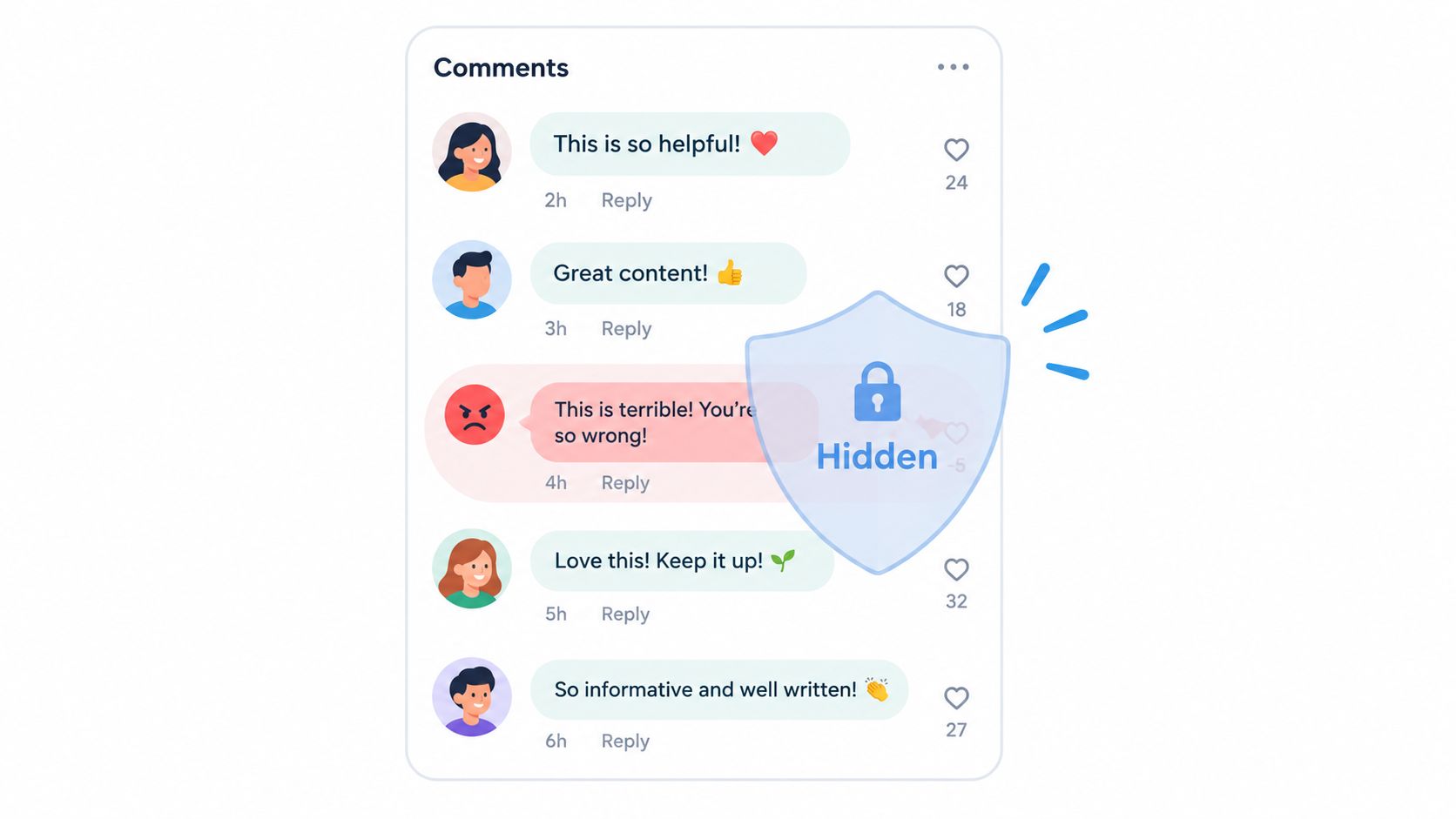
Comment moderation is a revenue and brand-safety control beneath paid ads. The objective is not to remove every negative response. It is to separate a genuine complaint from spam, impersonation, abuse, misinformation, or a competitor's sales pitch, then apply the right action.
A scam link beneath an ad can make shoppers question the offer itself. Repeated spam also consumes the team's attention, leaving less capacity for product questions and legitimate complaints. Treat the comment section as part of campaign operations, not as a separate reputation task.
Instagram's comment volume calls for selective review. Socialinsider's Instagram benchmarks reports that average comments per Instagram post fell by 16%, while Reels continued to generate deeper conversation than other formats. With fewer comments, accurate classification matters more. A relevant question should receive a useful answer, while an unsafe or irrelevant post should not receive attention that gives it more visibility.
Use a decision rule, not a blanket filter
Answer genuine questions and fair criticism. Flag uncertain comments for human review. Hide clear scams, impersonation attempts, harmful abuse, and irrelevant promotional content when policy permits it.
Apply the rule to campaign-specific risks:
Competitor spam: Flag posts that redirect shoppers to another offer.
Scam patterns: Hide suspicious links, fake giveaways, and language that imitates the brand.
Industry risk: Add terms tied to misinformation or regulated claims.
False positives: Review moderation logs weekly and adjust rules when legitimate criticism is caught.
Human escalation: Send refund disputes, safety complaints, and sensitive allegations to a trained reviewer.
A damaged-order complaint needs a public acknowledgment and a private support route. A deceptive link pretending to represent the brand should be hidden, without turning the removal into a public argument. Keep the complaint visible when it helps other shoppers understand a real product issue.
For practical guidance on removing unwanted comments, follow Exerta's Instagram comment moderation workflow. Agencies can document these rules alongside how Sup uses community seeding, while keeping paid-ad moderation focused on safety, relevance, and revenue.
3. Personalized Follow-Up Sequences for Abandoned Interest
A comment can show buying intent without generating a click. The prospect may need proof, reassurance, a clearer offer, or a different route to purchase. Treat the interaction as unfinished demand that still needs a controlled next step.
Start with the buyer's hesitation, not a fixed message sequence. A shopper asking about fit needs different follow-up from someone requesting reviews or reacting to price. The public reply should answer the immediate question and make the next action obvious. If the user takes a messageable action, the private follow-up can add relevant evidence or remove checkout friction.
Instagram's messaging rules limit how long that conversation can continue. Meta's policy guidance gives businesses a 24-hour window to respond after a user message or other messageable action, and the window resets when the user messages again. A comment and a DM are separate surfaces, so a comment alone does not create an unrestricted private conversation window.
Use the permitted window for useful, specific help. Free-form replies can include links and promotional content during that period. Once it closes, the prospect must re-engage or receive an approved message type. A sequence that assumes unlimited DMs creates both compliance risk and poor customer experience.
Build recovery paths around intent
For a premium ecommerce product, answer the product question publicly, then send permitted private proof, such as reviews, sizing guidance, or a shorter checkout route. For a telehealth advertiser, provide pricing and booking information, then send complex questions to a human instead of extending automated sales copy.
Set each path with a clear stopping point:
First touch: Answer the comment and give one direct next step.
Private follow-up: Move qualified interest into the permitted DM window after a messageable action.
Recovery: If the prospect does not buy, use an owned channel only after explicit opt-in.
Exit rules: Stop after an opt-out, resolved support issue, or purchase.
Measurement: Report conversion by comment intent, route, message, and touch position.
Log the trigger, consent state, message sent, and outcome. That record lets paid-social teams distinguish abandoned interest from low-intent engagement and adjust creative or offer strategy.
Exerta's live channels are Facebook, Instagram, TikTok, and website chat. SMS and email are launching next, so channel expansion should remain separate from Instagram compliance. Use Exerta's Instagram DM automation guidance when mapping public replies, permitted private follow-up, opt-outs, and human escalation.
4. Objection Handling With Pre-Approved Rebuttals
Repeated objections should produce reliable answers, not improvised claims from whoever is monitoring the ad account. “Too expensive,” “Where do you ship?” “How long does delivery take?” and “Do you have a guarantee?” each need an approved response path.
Build rebuttals from three parts: the verified fact, the reason it matters, and one appropriate next step. A premium skincare brand can explain ingredient sourcing, testing, formulation, or payment options in response to a price concern. A solar advertiser may need location, financing, incentives, and property details before giving a useful answer.
The operating trade-off is control versus flexibility. A rigid script sounds repetitive and can avoid the shopper's actual concern. An unrestricted automated response can introduce inaccurate or non-compliant claims. Approved building blocks let the AI employee assemble a relevant reply while keeping facts and boundaries fixed.
Practical rule: Let automation handle predictable objections. Escalate questions involving medical judgment, refund discretion, legal interpretation, or facts the system cannot verify.
Use comment history to improve the library. Review unanswered and escalated comments, then group them by objection, product, campaign, and customer stage. Write variants that clarify the decision instead of dismissing the concern.
Record each objection with:
The exact objection: Preserve the buyer's wording so the trigger reflects real comments.
The approved answer: State the verified product fact without unsupported promises.
The proof asset: Link to a product page, guarantee policy, lab report, shipping page, or booking route.
The escalation condition: Specify when a human must review the reply.
The expiry rule: Remove outdated offers, stock statements, and policy language.
A supplement brand can answer an independent-testing question with its approved lab-report page and guarantee terms. A subscription brand can address cancellation or “what if I don't like it?” with the current policy, then send account-specific requests to support.
Keep the first reply focused on reducing uncertainty. A discount should not bury the answer. Teams designing welcome and first-response flows can use Exerta's Instagram welcome-message guidance to structure the opening before adding objection branches.

5. Channel-Specific Tone and Compliance Adaptation
A reply can preserve brand trust or create a compliance problem within seconds. Instagram comments usually need concise, visual, conversational answers. TikTok calls for shorter replies shaped around the video. Website chat supports a direct route to product selection or checkout.
Keep the facts consistent across surfaces. Adapt the tone, length, call to action, and compliance language to each channel. Copying one script everywhere makes a paid-social comment layer feel automated and can send users to the wrong next step.
Exerta AI employees work across Facebook, Instagram, TikTok, and website chat today. Each channel can use approved voice examples, response rules, escalation paths, and destination links. A fitness advertiser might answer an Instagram question with product detail and a consultation page, then use a shorter TikTok reply that directs the viewer to the platform's permitted action.
Separate tone from regulated claims
Compliance needs its own control layer. A telehealth reply should not diagnose, guarantee an outcome, or replace professional advice. A financial or insurance advertiser may need disclosures that vary by jurisdiction and campaign. Put those requirements in approved templates and escalation rules before comments reach live review.
Build a channel matrix with:
Voice: Formal, conversational, concise, educational, or visual.
Destination: Product page, booking page, DM, website chat, or human support.
Disclosures: Industry and jurisdiction requirements for each campaign.
Forbidden language: Guaranteed outcomes, unsupported medical claims, or misleading urgency.
Review owner: The person responsible for approval and updates.
For practical voice development, use Exerta's brand voice examples to document wording, sentence length, structure, and acceptable variation. The matrix should also define who can approve partner responses and how those replies stay aligned with campaign rules. Teams extending engagement beyond owned replies can collaborate on Instagram for revenue through a documented partnership layer. Consistency means shared brand standards, not identical sentences everywhere.
6. Proactive Upsell and Cross-Sell Within Replies
Instagram comments sit beneath paid ads as both an intent signal and a merchandising opportunity. A shopper asking whether a serum suits acne may also need a cleanser. Someone asking whether a fitness mat is durable may benefit from a carrying bag. The recommendation should follow the question, not interrupt it.
Answer the original product concern first. Add one relevant option only when it addresses a stated need or a supported buying pattern. A skincare reply might confirm that the serum is intended for the concern, then mention a cleanser customers often pair with it, with a bundle link only if the offer is current. A fitness brand can confirm durability before suggesting a bag for daily transport. The shopper should receive the basic product fact without working through a sales pitch.
Use the comment to choose the merchandising path:
Product-fit trigger: Suggest an adjacent item when the comment names a use case that product supports.
Bundle trigger: Show a bundle only when its price and contents are current and approved.
Customer-stage trigger: Resolve fit or price concerns before recommending a premium item.
Frequency cap: Keep one reply focused. Do not stack several offers.
AOV tracking: Compare average order value by reply type and product pairing.
These rules turn cross-sell replies into an operating control rather than a guess. Start with order data, including product pairs, bundles, repeat purchases, and margin priorities. Then set clear conditions for the AI employee, with human review for unusual pairings or sensitive claims.
A premium recommendation may suit a shopper asking about performance or durability. It may be inappropriate for someone asking only about shipping. The same customer can receive different suggestions based on the comment, campaign, product, and previous conversation.
Use language such as “Many customers pair this with…” instead of assuming the shopper should buy more. A useful answer with one relevant option can capture additional revenue while protecting trust and keeping the paid-social comment layer focused.
7. Multi-Brand and Multi-Campaign Consistency at Scale
Scale requires separation before automation. Agencies manage several comment streams at once, each with different products, offers, policies, approval rules, and risk levels. A casual direct-to-consumer voice may be unsuitable for a telehealth question, while a telehealth disclaimer can look out of place beneath a fashion ad. Treat comments as a revenue and brand-safety layer, with campaign context controlling what the advertiser may safely promise.
Build the operating system around two records:
Brand profile: Voice, audience, product facts, policies, prohibited claims, approved links, common objections, and escalation rules.
Campaign profile: Featured product, creative angle, offer, destination URL, inventory status, and active dates.
The brand profile protects consistency. The campaign profile prevents stale or mismatched replies. A comment asking whether a promoted item is available should receive the current campaign status, not a generic answer copied from another account.
A single AI employee deployment can serve multiple client environments when knowledge, permissions, and reporting remain separated. Brand A may use a conversational direct-to-consumer tone. Brand B may require a professional software voice. Brand C may require human approval before any reply is published. Keep those decisions in configuration, not in informal team memory.
Use a practical control layer:
Approval workflow: Client approval for templates, with human review for sensitive branches.
Escalation map: Named owners for support, sales, compliance, and crisis issues.
Client dashboard: Separate reply logs, attribution, moderation actions, and performance reporting.
Change control: A record of who changed a template and when it went live.
Permissions: Account-level access that limits publishing and editing rights.
Oversight protects both revenue and ad quality. A wrong answer repeated across several accounts becomes an agency-wide brand-safety issue. Require approval gates for new flows, review logs weekly, and test campaign variables before increasing automation.
For teams running paid campaigns across multiple social channels, shared operational memory improves the next launch. Preserve each client's data and voice, then record which questions signal purchase intent, which objections need clearer education, and which moderation rules create false positives. That knowledge scales without blending brands.
7-Point Instagram Comment Reply Comparison
Tactic | Implementation complexity | Resource requirements | Expected outcomes | Ideal use cases | Key advantages |
|---|---|---|---|---|---|
Immediate Response to Buyer Intent Signals | Low–Medium: same-day setup; brand voice training and escalation rules | AI intent detection, reply templates, checkout link integration, attribution hooks, multi-language support | Captures high-intent prospects quickly; higher conversion vs manual replies (notable uplifts within first hour) | Flash sales, high-comment posts, DTC e‑commerce, paid social ads | Converts hot leads in seconds; scales 24/7; reduces response-time friction; measurable attribution |
Strategic Non-Response and Toxic Comment Suppression | Low: configure moderation rules and thresholds quickly | Keyword filters, sentiment analysis, account-quality checks, audit logs, human review pipeline | Cleaner comment feed; protects ad quality scores and ROAS; large reduction in manual moderation time | High-ad-spend campaigns, regulated industries, high-spam environments | Preserves brand safety and ad performance; prevents negative virality; large moderation time savings |
Personalized Follow-Up Sequences for Abandoned Interest | Medium: design multi-touch sequences and test variants | Automation platform, DM capabilities, sequence templates, analytics; email/SMS integrations when available | Recovers a substantial share of fence-sitters (examples show 30–50% recovery potential); improved conversion over one-off replies | Higher-consideration purchases, lead-gen, products with multi-step buying cycles | Nurtures warm prospects automatically; leverages 24‑hour DM window; scalable personalization |
Objection Handling with Pre-Approved Rebuttals | Medium: audit objections, craft rebuttals, set escalation rules | Rebuttal library, A/B testing tools, escalation workflow, analytics and update process | Reduces lost sales from common objections; ensures consistent, on‑brand replies; measurable conversion lift | High-ticket or complex products, frequent objection patterns, regulated categories | Consistent objection responses; faster rebuttals; scales expertise and reduces rep training |
Channel-Specific Tone and Compliance Adaptation | Medium–High: train per-channel voice and legal constraints; ongoing tuning | Channel voice profiles, compliance templates, character-limit enforcement, legal review | Improved engagement per platform; lower compliance risk; better inbox placement and audience fit | Multi-channel campaigns (IG, TikTok, FB, chat), telehealth/finance, cross-channel brands | Maintains brand while matching platform norms; automates disclaimers; reduces tone‑deaf replies |
Proactive Upsell and Cross-Sell Within Replies | Low–Medium: map product affinities and build upsell rules | Purchase data, affinity mapping, bundle pricing, attribution tracking, upsell templates | Increases average order value; incremental revenue from existing traffic (examples show double-digit uplift in bundle uptake) | DTC with complementary SKUs, higher-margin catalogs, product bundles | Boosts AOV without extra ad spend; delivers timely, natural upsells at point of intent |
Multi-Brand and Multi-Campaign Consistency at Scale | High: profile brands, set approval workflows, maintain segmentation | Brand profiles per client, centralized approvals, client dashboards, privacy controls | Scales agency capacity; consistent replies across clients; faster onboarding and reduced manual overhead | Agencies or platforms managing many client accounts or brands | Ensures brand consistency at scale; reduces onboarding time; centralizes control and reporting |
Turn Replies Into a Paid-Social Operating System
Replying to comments on Instagram works best as a connected operating system, not a collection of isolated automations. Start with classification. Route each comment by intent, risk, urgency, and customer status. A product question needs a fast answer. A scam needs moderation. A medical or refund issue needs escalation. A qualified buyer who stops responding needs a compliant recovery path.
Next, publish approved templates for the highest-volume questions and objections. Keep product facts, prices, links, guarantees, shipping terms, and disclosures current. Give AI employees room to personalize the response around the comment, but don't let them invent policy, availability, or regulated claims.
Then define the handoff. Human reviewers should know which comments they receive, what context appears with the escalation, and how quickly they need to act. Your workflow should log public replies, private messages, hidden comments, approvals, opt-outs, and purchases. Without those records, the team can't distinguish useful automation from noisy activity.
Test the system on your highest-volume Instagram campaign first. Measure purchases and recovered revenue, not just reply count. Track comment rate, intent-route volume, click-throughs, moderation actions, escalations, opt-outs, and false positives. Review logs weekly. Expand only after the first campaign shows that the rules protect legitimate criticism, suppress harmful content, and attribute closed sales accurately.
Exerta is an option for teams that need AI employees, configurable workflows, logged actions, and coverage across Instagram, Facebook, TikTok, and website chat. Exerta reports adoption by 250+ brands, a 15% average sales lift, $2M+ in recovered revenue, and 99.9% uptime as product proof points. Treat those figures as platform-reported information, then validate performance against your own campaigns, products, approval process, and attribution setup.
Exerta provides AI employees that reply to Instagram comments and DMs, moderate harmful content, and recover buyer interest in a brand-consistent voice. Visit Exerta to connect your paid-social comment workflow, configure escalation rules, and measure which conversations lead to revenue.